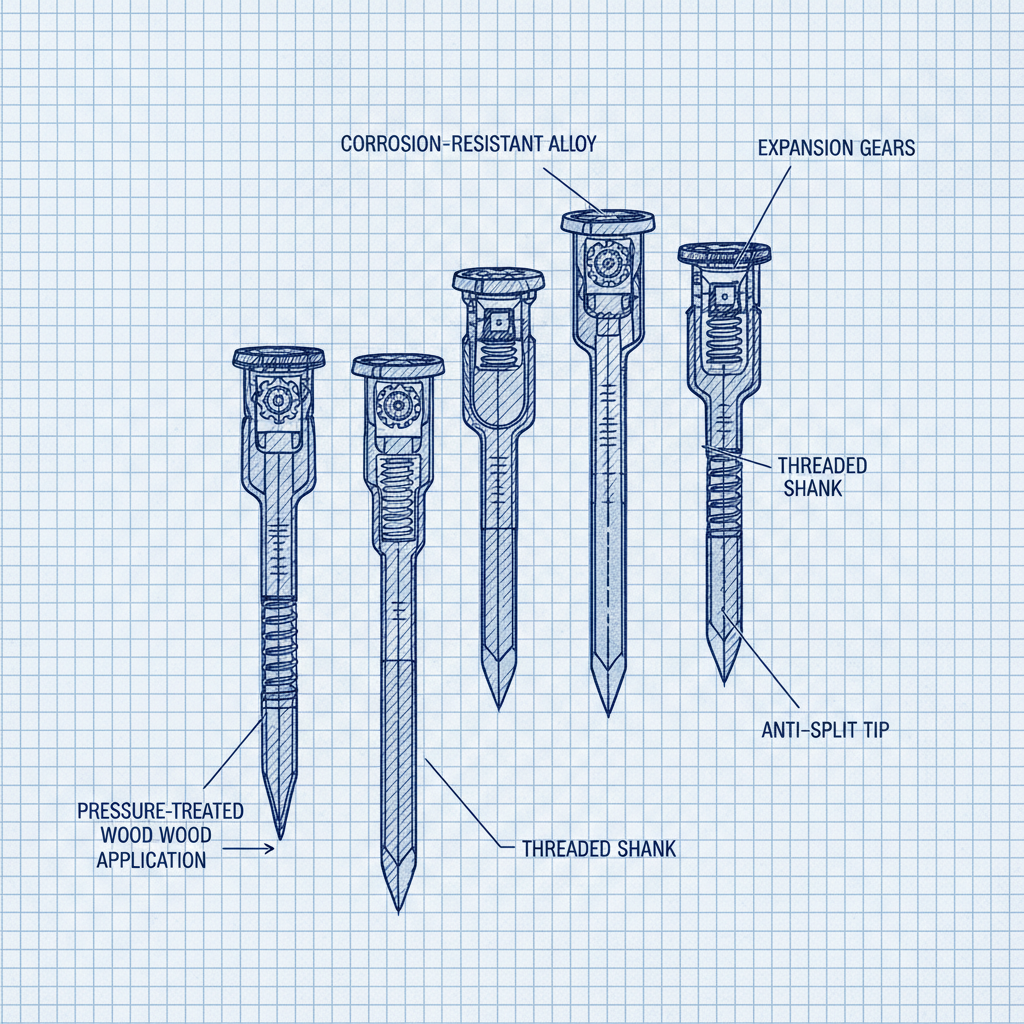


When procurement managers evaluate the coil nails price, they are often balancing the tension between immediate unit costs and the long-term operational efficiency of high-volume fastening. In the competitive landscape of metal products manufacturing, price is rarely a standalone metric; it is a reflection of material grade, coating quality, and production scale.
For industrial applications ranging from pallet assembly to structural framing, the cost of fasteners can fluctuate based on global steel indices and the specific technical requirements of the coil configuration. Understanding the drivers behind these costs allows buyers to move beyond simple price comparisons and toward a Total Cost of Ownership (TCO) model.
This analysis explores the variables that influence pricing in the fastener industry, the trade-offs between different nail specifications, and how to identify a manufacturing partner that offers scale-driven competitive pricing without compromising structural integrity.

Analyzing the Primary Drivers of Fastener Pricing

The pricing of coil nails is primarily governed by the volatility of raw steel markets and the complexity of the manufacturing process. As a specialized segment of the metal products industry, coil nails require precision winding and consistent collation to ensure they feed through pneumatic tools without jamming, which adds a layer of processing cost over standard loose nails.
Material choice plays a critical role; for instance, galvanized coatings increase the price relative to bright steel but provide essential corrosion resistance for outdoor applications. The thickness of this coating and the grade of the wire used directly correlate with the product's durability and, consequently, its market value.
Furthermore, the scale of production significantly influences the final quote. Manufacturers with integrated production lines—similar to the infrastructure found at the Baoding Yongwei Group subsidiaries—can leverage economies of scale to reduce the per-unit cost, passing those savings on to B2B buyers who order in bulk quantities.
Technical Specifications That Impact Unit Cost
Beyond raw materials, the technical geometry of the nail determines the manufacturing difficulty. Gauge size, head diameter, and shank thickness are the three primary variables. A 16GA nail, for example, offers a different strength profile and cost point than thinner finish nails, as it requires more material and higher pressure during the forming process.
Collation quality is another hidden cost driver. Low-quality collation leads to frequent tool downtime, which increases the operational cost far beyond the initial purchase price. High-precision winding ensures that each nail is positioned exactly, reducing the risk of "misfires" or "stripping" in industrial nailers.
Customization also introduces price variance. Whether it is a specific length for a unique cabinetry project or a specialized galvanized finish for marine environments, bespoke requirements move the product from a commodity price point to a value-added technical solution.
High-Volume Application Scenarios for Coil Fasteners
Coil nails are engineered for speed and repetition, making them the standard for industries where manual nailing would be prohibitively slow. In the production of shipping pallets and industrial crates, the ability to drive hundreds of fasteners per hour is critical to maintaining throughput.
In the construction sector, specifically in roofing and sub-flooring, coil fasteners allow operators to carry thousands of nails in a single magazine, minimizing the need for frequent reloads. This efficiency is particularly evident in large-scale residential framing where the volume of fasteners used per square foot is substantial.
Additionally, furniture manufacturing—specifically for heavy-duty upholstery and sofa frames—relies on the increased holding power of 16 gauge fasteners. These applications require a balance between a discreet appearance and the structural strength necessary to support constant physical stress over the product's lifecycle.
Comparative Efficiency of Industrial Fastening Systems
When comparing coil nail systems to traditional strip or loose nail methods, the primary gain is found in the reduction of downtime. The higher capacity of coil magazines directly translates to a higher "active firing" ratio per hour of labor.
The following data illustrates the relative efficiency gains across different operational metrics when shifting from standard fastening to optimized coil nail systems in a high-volume production environment.
coil nails price Performance Metrics
As the data suggests, while the initial unit price may vary, the impact on labor productivity and tool uptime provides a significant return on investment. The reduction in reload frequency alone can increase overall production speed by a substantial margin in industrial settings.
Strategic Procurement for Metal Fastening Supplies
For B2B procurement officers, the goal is to decouple price from quality. A common risk in sourcing is selecting a supplier based solely on the lowest quote, only to discover that the nail shanks are inconsistent or the collation is prone to failure, leading to expensive production delays.
A more strategic approach involves auditing the manufacturer's capacity and quality control processes. Suppliers that operate large-scale facilities—such as those with hundreds of machines and standardized quality management—are better equipped to provide consistent batches that meet rigorous industrial standards.
Additionally, implementing a "just-in-time" delivery schedule with a reliable partner can reduce warehousing costs. By aligning orders with production cycles, companies can optimize their cash flow while ensuring a steady supply of critical fasteners.
Future Shifts in Fastening Material Technology
The industry is likely to see a shift toward more sustainable coating technologies. Traditional galvanization is effective, but new eco-friendly alternatives may emerge to reduce the environmental impact of zinc processing while maintaining high corrosion resistance.
Automation in the collation process is also expected to evolve. AI-driven quality inspection on the production line could potentially eliminate the "defect rate" entirely, ensuring that every coil delivered to the customer is 100% compatible with their pneumatic equipment.
Furthermore, the development of high-tensile alloy wires may allow for smaller gauge nails that provide the same holding power as thicker options. This would reduce the total volume of steel required per project, potentially lowering the cost for the end user while increasing structural efficiency.
Selection Guide for Industrial Coil Nail Procurement
Choosing the right fastener requires an analysis of the material being joined and the environmental conditions the finished product will face. The following table provides a decision-making framework for selecting the appropriate fastener type based on application requirements.
By aligning the technical specification with the intended use case, procurement teams can avoid over-specifying (which wastes money) or under-specifying (which risks structural failure).
| Application Type | Recommended Gauge | Primary Cost Driver | Critical Performance Metric |
|---|---|---|---|
| Outdoor Pallets | 15GA - 16GA | Galvanized Coating | Corrosion Resistance |
| Indoor Furniture | 16GA - 18GA | Precision Head Shape | Aesthetic Integration |
| Heavy Framing | 13GA - 15GA | Steel Volume | Shear Strength |
| Packaging Crates | 16GA | Production Volume | Feeding Consistency |
| Upholstery Work | 18GA | Wire Purity | Penetration Depth |
| Sub-floor Fixing | 15GA | Coating Thickness | Withdrawal Force |
Ultimately, the most cost-effective solution is one that maximizes tool uptime and minimizes material waste. For those evaluating these parameters, reviewing the technical capabilities and product range available through www.sxj-staple.com can provide a clearer benchmark for industrial fastening standards.
Frequently Asked Questions
Conclusion
Optimizing the cost of industrial fasteners requires a shift in perspective from "lowest price per unit" to "lowest cost per installation." By understanding the technical drivers—from material gauge to collation precision—procurement teams can select products that enhance production speed and ensure structural longevity.
As the metal products industry evolves toward higher automation and more sustainable materials, the partnership between the manufacturer and the end-user becomes critical. Those who prioritize consistency and scale-driven efficiency will maintain a competitive edge in their respective production landscapes. For comprehensive product specifications and industrial fastening solutions, further information is available at www.sxj-staple.com.