

For professional contractors and DIY enthusiasts in the fasteners manufacturing sector, sourcing cheap brad nails often presents a challenging trade-off between immediate cost savings and long-term project integrity. These small-gauge nails are essential for delicate trim work and cabinetry, where minimizing visible damage is as critical as the strength of the bond.
The primary challenge for buyers is identifying the threshold where a lower price point begins to compromise metallurgical quality, resulting in bent nails, frequent nail gun jams, or poor holding power. Understanding the cost drivers in the metal products industry allows procurement managers to secure competitive pricing without risking operational downtime.
This analysis provides a comprehensive framework for evaluating budget-friendly brad nails, focusing on material specifications, supplier reliability, and the actual cost-per-project impact to ensure that "cheap" does not translate to "low quality."

Defining Value in Budget Brad Nails

When searching for cheap brad nails, the definition of "value" shifts from the unit price to the performance-to-cost ratio. In the fasteners industry, price reductions are typically achieved through economies of scale in production or the use of standardized alloys. High-volume manufacturers can offer lower prices by optimizing the cold-heading process and reducing material waste during the wire-drawing stage.
True value is found in fasteners that maintain dimensional consistency. Even a slight deviation in the shank diameter or head thickness can lead to incompatibility with pneumatic nailers, causing jams that cost more in labor time than the savings gained from the cheaper hardware.
Key Technical Specifications to Verify
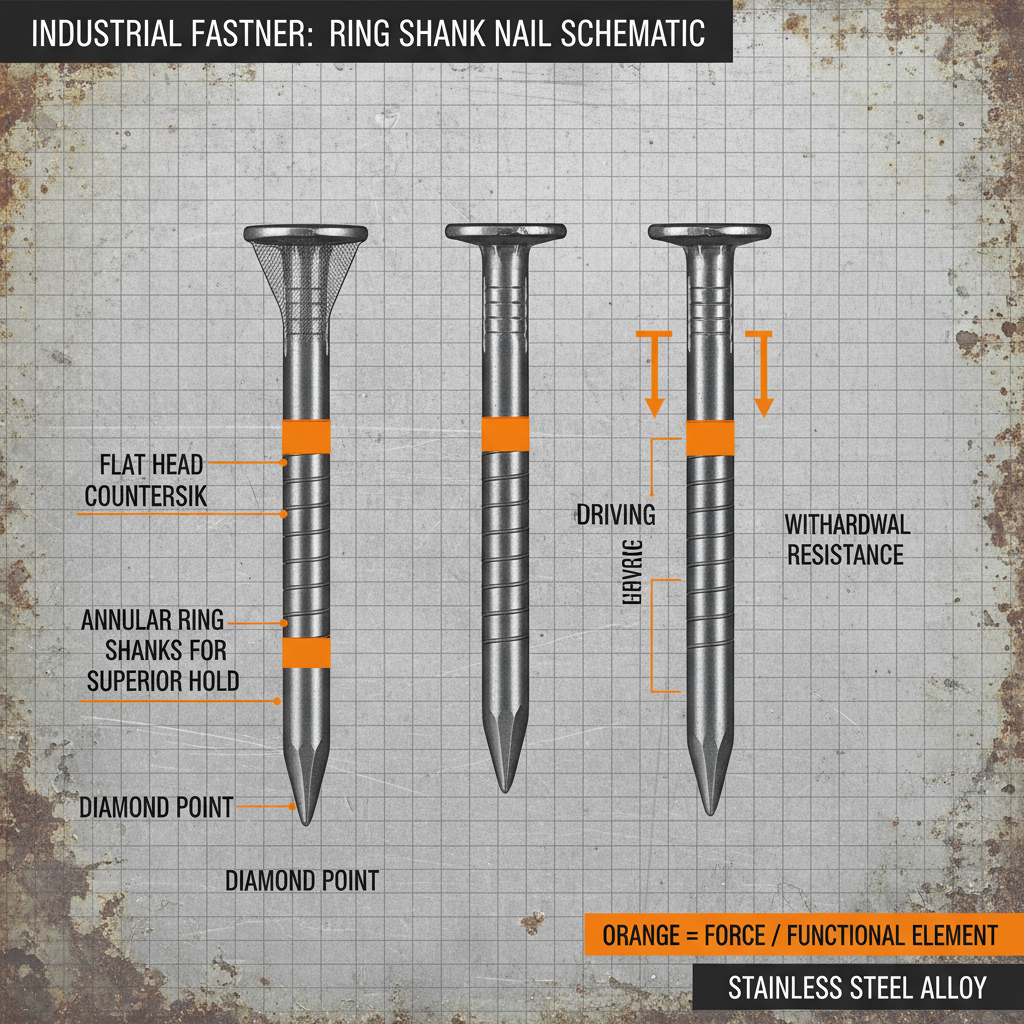
To avoid quality pitfalls, buyers must look beyond the price tag and scrutinize the technical data. The gauge (typically 18GA for brad nails) must be precise. Variations in the thickness of the wire can lead to nails that either slide out of the magazine or fail to fire completely. Additionally, the coating—whether galvanized or stainless—determines the nail's resistance to corrosion in humid environments.
Another critical factor is the head geometry. A budget nail with a poorly formed head may "blow through" the wood, failing to secure the workpiece. Ensuring that the manufacturer adheres to strict tolerances for head diameter and shank length is the only way to guarantee that cheap brad nails will perform reliably across different wood densities.
Application-Specific Selection Criteria
Not all projects require the same grade of fastener. For internal cabinetry or temporary bracing, highly affordable carbon steel brad nails are often sufficient. However, for exterior trim or furniture intended for high-moisture areas, investing slightly more in corrosion-resistant options is a technical necessity to prevent rust staining on the finished surface.
The choice of length also dictates the cost and effectiveness. Shorter nails are generally cheaper but may not provide enough shear strength for heavier moldings. Matching the nail length to the thickness of the mating members is essential for achieving a flush finish without splitting the wood, a common risk when using low-grade fasteners with inconsistent hardness.
Analyzing Total Cost of Ownership (TCO)
The cost of cheap brad nails is not limited to the purchase price. A conceptual analysis of the Total Cost of Ownership (TCO) reveals that the cheapest nails can become the most expensive if they increase the failure rate during installation. The following illustrative index compares the relative impact of different quality tiers on overall project costs.
This relative evaluation demonstrates that while "Economy" tier nails have the lowest acquisition cost, their higher associated labor costs—due to jams and rework—often make the "Standard" or "Industrial" tiers more cost-effective over the duration of a large-scale project.
Evaluating Manufacturer Supply Capabilities
Directly sourcing from a manufacturer with an integrated production chain is the most effective way to find truly affordable brad nails without sacrificing quality. Companies that manage everything from wire drawing to final packaging can eliminate middleman markups. For instance, manufacturers with extensive facilities, such as those operating large-scale workshops with hundreds of machines, can provide consistent bulk pricing.
When evaluating a supplier, buyers should check for production capacity and lead-time stability. A manufacturer capable of delivering thousands of units within a 7 to 30-day window suggests a streamlined operation. This reliability ensures that projects are not delayed by fastener shortages, which is a hidden cost often overlooked when chasing the lowest possible unit price.
Risks of Substandard Fasteners
The risks associated with excessively cheap brad nails typically manifest in three areas: equipment damage, structural failure, and aesthetic compromise. Substandard metallurgy can lead to nails that bend upon impact, which not only wastes material but can also damage the driver blade of an expensive pneumatic nail gun.
From a structural perspective, nails with inconsistent tempering may lack the necessary grip, leading to joints that loosen over time. Aesthetically, low-quality coatings may flake or bleed, ruining a high-end finish. These failures often necessitate complete rework, effectively erasing any initial savings gained from the purchase of budget fasteners.
Procurement Decision Framework
To make an informed decision, procurement officers should use a structured comparison matrix. This allows for a qualitative assessment of different options based on the specific needs of the application, rather than focusing solely on the invoice price.
| Option Tier | Primary Use Case | Holding Power | Risk Level |
|---|---|---|---|
| Economy | Temporary/Internal | Moderate | High (Jams) |
| Standard | General Trim | Strong | Low |
| Industrial | Heavy Duty/Commercial | Very Strong | Minimal |
| Galvanized | Exterior/Humid | Strong | Low (Corrosion) |
| Stainless | Marine/High-End | Strong | Minimal |
| Bulk Direct | Large Scale Mfg | Variable | Medium |
By applying this framework, buyers can identify the "sweet spot" where the cost of cheap brad nails aligns with the required performance standards, ensuring project efficiency and long-term durability.
Frequently Asked Questions
The primary differences lie in the dimensional tolerance and the quality of the coating. Premium nails have tighter specifications, reducing the risk of nail gun jams, while budget options may have slight variations that increase the probability of misfires.
Yes, if the nails are made from inferior alloys that bend easily or if the head dimensions are inconsistent, they can cause jams that put undue stress on the driver pin and piston of the nailer.
Request technical samples to test for fit and fire consistency. Additionally, evaluate the manufacturer's production scale and lead-time reliability to ensure they can sustain quality over large volumes.
No. Some are affordable due to efficient high-volume manufacturing (which maintains quality), while others are cheap due to lower-grade raw materials (which compromises performance).
18 Gauge is the industry standard for brad nails, offering a balance between invisibility and holding power for trim and cabinetry.
Check the collation method, the material coating, and the specific length requirements to ensure compatibility with your current equipment and project needs.
Conclusion
Securing affordable brad nails requires a strategic approach that balances unit cost with operational reliability. By focusing on dimensional accuracy, material specifications, and manufacturer capacity, buyers can significantly reduce their expenditures without introducing unacceptable risks to their projects or equipment.
For organizations seeking professional-grade fasteners at competitive pricing, reviewing available product specifications at www.sxj-staple.com can help align procurement choices with specific project requirements.