
Talk With Us
+86-13601661296
Email Address
admin@sxjbradnail.com
Talk With Us
+86-13601661296Email Address
admin@sxjbradnail.com
Procuring high-quality fasteners often involves a complex balance between technical specifications and cost efficiency. For professionals in the woodworking and furniture industries, understanding the variables that influence the unit price of finishing nail 11 2 is critical for maintaining project margins without compromising structural integrity.
The market for specialized nails is subject to volatility in raw steel prices and manufacturing precision. A "11 2" specification typically refers to a specific gauge and length combination designed for discrete fastening, where the head of the nail is driven slightly below the surface to create a clean, professional finish.
This analysis examines the economic drivers of finishing nail pricing, the technical standards that justify cost variances, and how to optimize bulk procurement within the global fastener supply chain.


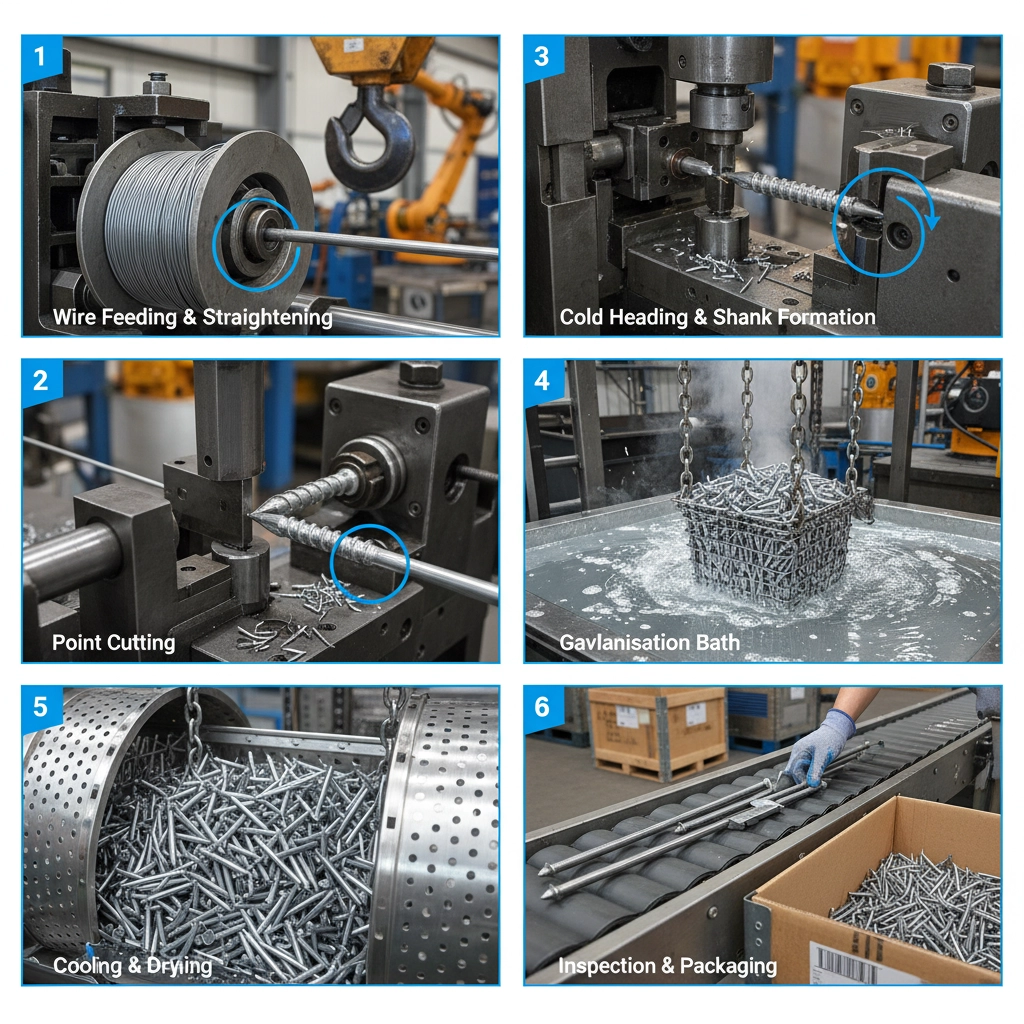
The cost of finishing nails is not static; it is an aggregate of raw material indices, energy costs for cold-heading, and logistics. Steel wire, particularly the low-carbon variety used for annealed products, fluctuates based on global ore availability.
When evaluating the unit price of finishing nail 11 2, buyers must consider the economy of scale. Manufacturers like those within the Baoding Yongwei Group ecosystem leverage large-scale production facilities to reduce the overhead cost per thousand units, passing those efficiencies to the distributor.
Precision in the "11 2" dimension is not merely about size, but about tolerance. A nail with inconsistent shaft diameters or irregular head shapes increases the failure rate during pneumatic firing, leading to "bent nails" and wasted material. Higher-priced nails typically offer tighter tolerances, ensuring a seamless feed in industrial nail guns.
The coating process also plays a significant role. Whether the nail is polished, galvanized, or stainless, the chemical treatment adds a layer of cost. Galvanization, for instance, requires an electrochemical process that increases the unit price but provides essential corrosion resistance for exterior applications.
Furthermore, the geometry of the point—whether it is a diamond point or a needle point—affects the ease of penetration. Advanced tooling required to produce sharper, more consistent points increases the manufacturing cost but significantly reduces the risk of splitting the wood substrate.
The metallurgy of the nail determines its performance under stress. Low-grade carbon steel may be cheaper per unit, but it is prone to oxidation and brittleness. High-tensile steel offers better grip and less likelihood of shearing during installation.
True value in fastener procurement is measured by the Total Cost of Installation (TCI), where a lower unit price is offset by the cost of rework, material waste, and potential structural failure.
For industrial users, the choice often falls between economy grade and premium grade. While the initial unit price of finishing nail 11 2 might be lower for economy options, the long-term stability and reduced oxidation of premium treated nails make them more cost-effective for high-end furniture and cabinetry.
To understand the pricing tiers, we can look at a relative value index. This index compares different grades of finishing nails based on their manufacturing complexity and material purity. The "Value Index" here represents the relative cost increase from a baseline economy nail.
As shown in the data, the jump from standard polished nails to stainless steel or high-grade galvanized options is significant, reflecting the added cost of raw materials and specialized processing.
In a typical industrial setting, such as a high-volume furniture assembly plant, the reliability of the fastener is paramount. For tasks like attaching decorative trim or assembling cabinet backs, the finishing nail must be small enough to be concealed but strong enough to hold the joint under thermal expansion and contraction.
When a manufacturer evaluates the unit price of finishing nail 11 2, they must consider the substrate. For example, hardwoods require nails with higher shear strength to prevent snapping, whereas softwoods allow for more economical options. Using the wrong grade in a professional scenario often leads to structural weaknesses that are only discovered after the product has reached the consumer.
Optimizing the procurement of fasteners requires a shift from "lowest price" to "best value." Bulk ordering directly from integrated manufacturers—those who control the process from wire drawing to final packaging—typically reduces the unit price significantly compared to purchasing through multiple layers of distributors.
Diversifying the fastener portfolio is another key strategy. A project may require premium stainless nails for exterior trim but can utilize standard polished nails for interior frames. By segmenting the requirements, a procurement manager can lower the average unit cost without compromising the integrity of the final build.
Finally, establishing long-term contracts with suppliers who have a proven track record of "zero complaint quality" ensures consistency. This reduces the hidden costs associated with quality control inspections and the downtime caused by defective batches of nails that jam pneumatic equipment.
To make an informed decision, buyers should utilize a weighted matrix. This involves scoring different options based on their technical performance, lead times, and price. A nail that is 10% cheaper but has a 5% higher failure rate is actually more expensive in a production environment.
The following table provides a conceptual framework for comparing different fastener options based on typical industrial requirements. This model helps in identifying the trade-off between cost and performance.
By analyzing these factors, companies can align their fastener selection with the specific quality standards of their target market, ensuring that the chosen product is neither over-engineered for the task nor under-powered for the application.
| Grade | Shear Strength | Corrosion Resist. | Cost Impact |
|---|---|---|---|
| Economy Polished | Low | Low | Baseline |
| Standard Carbon | Medium | Low | Low Increase |
| Premium Treated | High | Medium | Moderate |
| Hot-Dip Galv. | High | High | Significant |
| 304 Stainless | Medium-High | Extreme | High |
| Specialized Alloy | Extreme | High | Premium |
The price is primarily driven by the cost of raw steel wire, the precision of the cold-heading process, and the type of surface treatment applied. High-volume production capabilities and raw material sourcing strategies of the manufacturer also play a critical role in determining the final wholesale cost.
Tighter tolerances require more precise tooling and more rigorous quality control during the manufacturing process. While this increases the unit price, it prevents "nail jams" in pneumatic tools, which saves labor costs and prevents damage to the workpiece.
Galvanized nails are generally more cost-effective and provide sufficient protection for most outdoor environments. Stainless steel is recommended for high-moisture or coastal areas where salt spray can penetrate galvanization, despite the significantly higher unit price.
Yes, buying in bulk reduces the impact of packaging and shipping costs. More importantly, it allows manufacturers to run longer production cycles for a specific gauge, reducing the setup time and cost associated with machine reconfiguration.
The main risks include inconsistent head sizes and poor material purity, which can lead to nails splitting the wood or bending during firing. This increases the cost of materials and labor, often outweighing the initial savings on the unit price.
Finishing nails are thinner and have much smaller heads designed to be sunk into the wood. Common nails are thicker and have larger heads for maximum holding power. The "11 2" refers to the specific diameter and length optimized for trim and cabinetry work.
Determining the ideal unit price of finishing nail 11 2 requires an understanding of the trade-offs between raw material costs and operational efficiency. For professional contractors and manufacturers, the cheapest nail is rarely the most economical choice when factoring in the risks of failure and the necessity of a high-quality finish.
By focusing on supplier integration and technical specifications, businesses can secure fasteners that provide structural reliability while maintaining a competitive cost structure. The move toward high-precision, zero-defect manufacturing continues to be the primary trend in the global fastener industry.