
Talk With Us
+86-13601661296
Email Address
admin@sxjbradnail.com
Comprehensive Guide to Selecting the Ideal Concrete Nail 2 Inch for Your Projects
Choosing the Right Concrete Nail 2 Inch: A Comprehensive Guide
When undertaking construction or DIY projects involving concrete, selecting the appropriate fasteners is crucial for structural integrity and safety. A concrete nail 2 inch offers a reliable solution for securing materials into concrete, brick, and masonry. This article explores the key features, applications, and considerations when choosing concrete nails, providing a comprehensive guide for both professionals and home enthusiasts. Proper selection ensures lasting connections and project success.
Understanding Concrete Nails: Materials and Construction
Concrete nails aren’t your typical woodworking nails. They're specifically hardened steel nails designed to penetrate dense materials without bending. These nails are manufactured using high-carbon steel and are often tempered to provide exceptional strength and durability. The tip of a concrete nail is typically pointed and hardened to facilitate easy penetration into concrete. Different coatings, such as zinc or epoxy, are applied to enhance corrosion resistance, making them suitable for both indoor and outdoor applications. Choosing the correct material ensures the longevity of your projects. You can find a variety of concrete nails, including those with ribbed shanks for enhanced holding power, at SXJ Staple.
Key Highlights: Concrete nails are hardened steel fasteners designed for penetration into concrete, brick, and masonry. They are tempered for strength and often coated for corrosion resistance.
Applications of a 2 Inch Concrete Nail
A 2-inch concrete nail is an ideal size for numerous applications. Common uses include securing wood framing to concrete foundations, attaching furring strips for drywall installation, fastening electrical boxes and conduit to concrete walls, and installing shelving or other fixtures to masonry surfaces. The 2-inch length provides adequate penetration for a secure hold without excessive protrusion. It’s a versatile fastener suitable for both heavy-duty construction and lighter DIY tasks. For demanding applications requiring greater holding power, consider longer or larger diameter nails.
Typical Applications:
• Securing wood framing to concrete foundations
• Attaching furring strips for drywall
• Mounting electrical boxes and conduit
• Installing shelving to masonry
Concrete Nail Comparison: Sizes and Types
Concrete nails come in various sizes and types to suit different needs. The length is the most crucial factor, with common sizes ranging from 1 inch to 3 inches. The diameter (gauge) also affects holding power; thicker nails offer greater strength. Some nails feature ribbed shanks for increased pull-out resistance, while others are smooth. Selecting the right type depends on the material being fastened and the load it needs to bear. Here’s a comparison of common concrete nail sizes:
Installing Concrete Nails: Best Practices
Proper installation is crucial for maximizing the holding power of concrete nails. Pre-drilling a pilot hole slightly smaller than the nail’s diameter is generally recommended, especially for harder concrete. This prevents splitting the concrete and makes driving the nail easier. Use a hammer to drive the nail straight and firmly into the concrete. Avoid bending the nail during installation, as this can significantly reduce its strength. For larger nails or dense concrete, a pneumatic nail gun designed for concrete fastening can be used. You can purchase high-quality tools and nails at SXJ Staple.
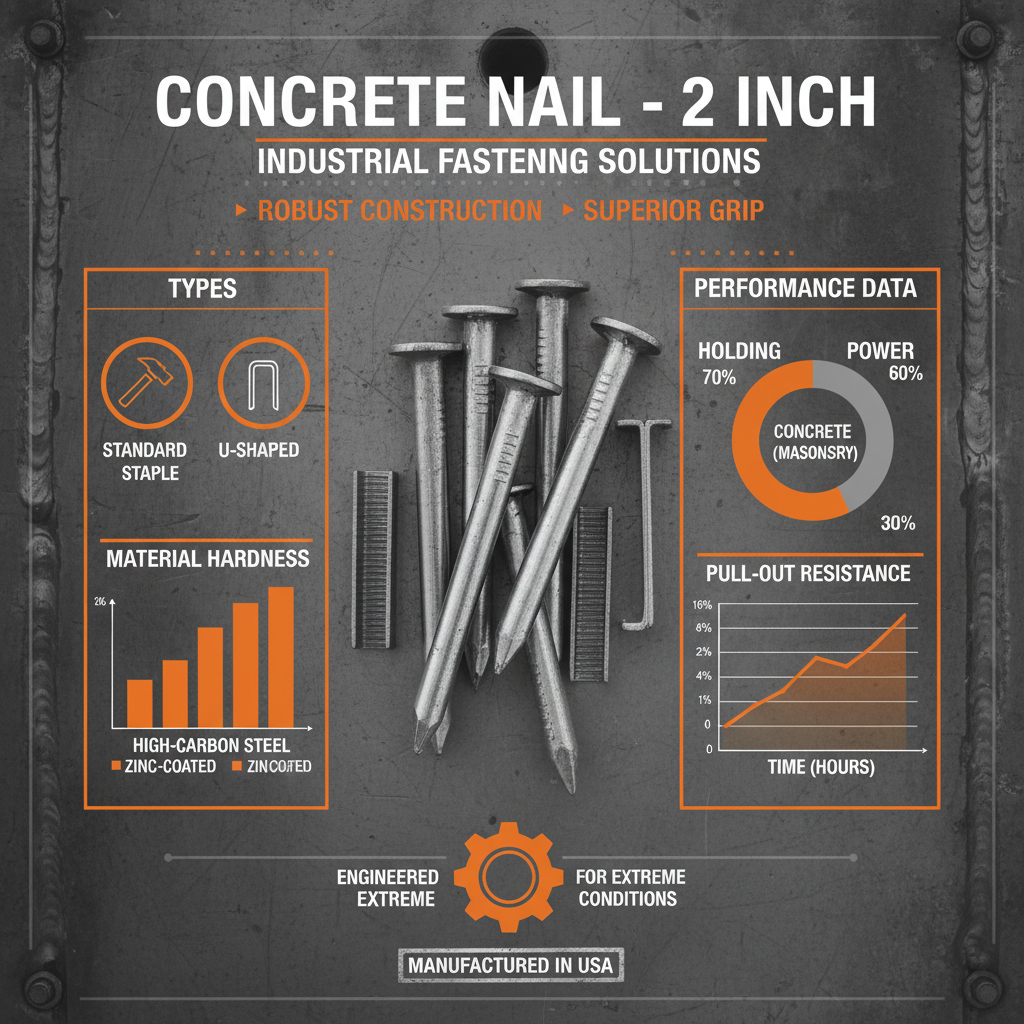
Choosing the Right Supplier: Quality and Reliability
Selecting a reputable supplier is paramount when purchasing concrete nails. Look for suppliers who offer high-quality nails made from hardened steel and coated for corrosion resistance. SXJ Staple is a trusted provider of concrete nails and other fasteners, committed to delivering durable and reliable products. Ensure the supplier can provide documentation regarding the nail's specifications and compliance with relevant safety standards.
Conclusion: Ensuring Secure Fastenings with the Right Concrete Nail
Choosing the correct concrete nail 2 inch, understanding its proper application, and selecting a reliable supplier are all essential steps to ensure a secure and long-lasting fastening solution. Invest in quality nails and tools for optimal results and peace of mind.
Frequently Asked Questions (FAQs)
Can concrete nails be used in brick?
Yes, concrete nails can effectively fasten into brick and masonry materials. However, the hardness of the brick or masonry will influence the ease of installation. Pre-drilling is often recommended for harder bricks to prevent splitting. Ensure the nail length is sufficient to penetrate deep enough into the brick for a secure hold. The 2-inch length is a versatile option for many brick applications.
What safety precautions should I take when using concrete nails?
Always wear safety glasses to protect your eyes from flying debris when hammering concrete nails. Gloves are also recommended to protect your hands. If using a pneumatic nail gun, follow the manufacturer's safety instructions carefully. Be mindful of your surroundings and ensure no one is in the path of the nail. Proper ventilation is also important when working in enclosed spaces.
How do I prevent concrete nails from bending during installation?
To prevent bending, ensure you are using a hammer of appropriate weight and that you are striking the nail head squarely. Pre-drilling a pilot hole can significantly reduce the risk of bending, especially in harder concrete. Using a nail starter or nail set can also help guide the nail and prevent it from bending over.
What is the difference between ribbed and smooth shank concrete nails?
Ribbed shank concrete nails offer greater pull-out resistance compared to smooth shank nails. The ribs create a mechanical lock within the concrete, making it more difficult for the nail to be extracted. Smooth shank nails are easier to drive but provide less holding power. For applications requiring a stronger hold, ribbed shank nails are recommended.
-
The Ultimate Guide to Choosing 20mm Concrete Nails for ConstructionNewsApr.16,2026
-
Professional Guide to Using 2 inch concrete nails for ConstructionNewsApr.09,2026
-
Understanding the Strength and Versatility of 2 Concrete Nails for ProjectsNewsApr.07,2026
-
Understanding the Strength and Versatility of 2 1 2 Concrete Nails for ConstructionNewsApr.04,2026
-
Comprehensive Guide to Using 1 Inch Concrete Nails for Robust FasteningNewsMar.31,2026
-
The Ultimate Guide to 1 Concrete Nail Applications and Secure Fastening SolutionsNewsMar.28,2026