
Talk With Us
+86-13601661296
Email Address
admin@sxjbradnail.comThe Ultimate Guide to Choosing 20mm Concrete Nails for Construction
The Ultimate Guide to Choosing 20mm Concrete Nails for Construction
When it comes to securing fixtures to masonry or reinforced concrete, the choice of fastening hardware can make or break the structural integrity of your project. The 20mm concrete nails are a staple in the construction industry, offering a precise balance of length and penetration power for light-to-medium duty applications. Whether you are installing wooden battens, electrical conduits, or decorative trim, understanding the technical nuances of these nails ensures a flush finish and a permanent hold. In this comprehensive guide, we will explore the materials, applications, and best practices for using these essential fasteners to achieve professional-grade results.
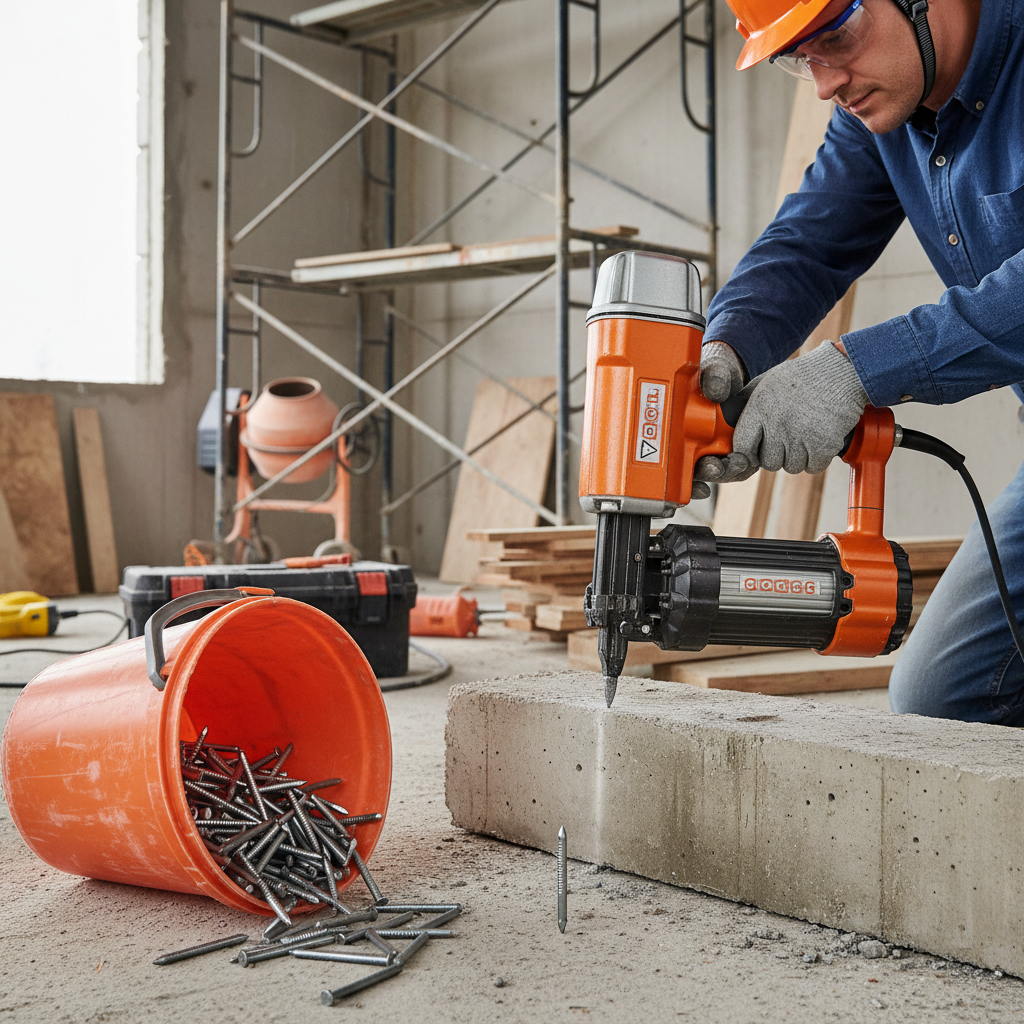
Material Composition of 20mm Concrete Nails
Not all concrete nails are created equal. To penetrate high-density concrete without bending or snapping, 20mm concrete nails are typically manufactured from hardened carbon steel or alloy steel. The heat-treatment process is critical; it increases the hardness of the shank, allowing the nail to displace concrete particles rather than deform under the impact of a hammer. For environments prone to moisture, such as basements or outdoor facades, galvanized coatings are often applied to prevent oxidation and rust streaks on the concrete surface.
Pro Tip: Always verify the hardness grade of your nails. Hardened steel is essential for masonry, while standard mild steel nails will almost always bend when hitting concrete.
Key Applications for 20mm Concrete Nails in Modern Building
The 20mm length is specifically designed for tasks where a deep penetration is not required but a secure grip is mandatory. Common uses include attaching thin wooden strips to walls, securing cable clips for networking and electrical wiring, and installing thin plastic moldings. Because they provide a low-profile head, 20mm concrete nails are ideal for finishing work where the fastener must be unobtrusive. Their ability to drive straight into the substrate saves time by eliminating the need for pre-drilling in softer masonry.
Comparing 20mm Concrete Nails vs. Concrete Screws
Choosing between a nail and a screw depends on the required load-bearing capacity and the permanence of the installation. While screws offer higher pull-out resistance, 20mm concrete nails are significantly faster to install and more cost-effective for large-scale projects. Nails are the preferred choice for "permanent" light fixtures where the speed of installation outweighs the need for adjustability. The following table highlights the core differences to help you decide.
Installation Tips for 20mm Concrete Nails
To avoid cracking the concrete or bending the nail, proper technique is essential. First, ensure the material being fastened is held firmly against the wall. When driving 20mm concrete nails, use a heavy-duty steel hammer and apply consistent, vertical force. Avoid glancing blows, as these are the primary cause of nail bending. For extremely hard concrete, a small pilot hole can be drilled to reduce the risk of spalling (where the concrete surface chips away around the nail head).
Quick Installation Checklist:
• Use a high-carbon hardened steel nail
• Ensure the hammer strike is perfectly perpendicular
• Check for internal reinforcements (Rebar) before striking
• Wear safety goggles to protect against flying concrete chips
Technical Specifications of Standard Concrete Nails
Understanding the dimensions and material properties is key for procurement and project planning. The 20mm concrete nails provided by professional suppliers usually adhere to strict tolerance standards to ensure consistency across thousands of units. Below are the typical technical specifications for standard 20mm masonry nails used in industrial settings.
Conclusion: Optimizing Your Project with Quality Fasteners
Selecting the right hardware is the foundation of any successful construction project. The 20mm concrete nails offer an efficient, cost-effective, and durable solution for light-duty masonry fastening. By prioritizing hardened materials and employing the correct installation techniques, you can ensure that your fixtures remain secure for years to come. For those seeking industrial-grade fasteners that meet international quality standards, choosing a reliable supplier is the final, most important step in the process.
Frequently Asked Questions (FAQs)
Why do my 20mm concrete nails keep bending during installation?
Bending usually occurs for two reasons: either the nails are not properly hardened, or the striking angle is incorrect. Ensure you are using hardened steel nails specifically designed for concrete, rather than common wire nails. Additionally, make sure the hammer head strikes the nail head perfectly flat. If the nail is tilted even slightly, the lateral force will cause it to bend. If you are working with extremely high-strength concrete, consider drilling a small pilot hole to ease the penetration.
Can I use these nails in brick walls?
Yes, 20mm concrete nails work exceptionally well in brick and cinder block. In fact, they penetrate brick more easily than poured concrete. However, be cautious when nailing near the edges of a brick, as the impact can cause the brick to crack or "spall." It is always recommended to drive the nail into the center of the brick for maximum stability and to prevent structural damage to the masonry unit.
Which coating is best for outdoor concrete nailing?
For outdoor applications, Hot-Dip Galvanized (HDG) is the gold standard. While standard zinc plating offers some protection, HDG provides a much thicker layer of zinc that protects the steel core from rain, humidity, and salt air. This prevents the nails from rusting, which is crucial because rust expands and can cause the surrounding concrete to crack over time. For internal, dry environments, a bright or clear finish is usually sufficient and more cost-effective.
How do I remove a concrete nail without damaging the wall?
Removing a hardened nail from concrete is challenging because of the tight friction. The best method is to use a pair of heavy-duty pincers or a claw hammer. To protect the concrete surface, place a thin piece of scrap wood or a metal washer under the head of the nail to act as a fulcrum. This distributes the pressure and prevents the hammer from crushing the concrete surface as you pry the nail upward. For nails that are completely flush, you may need to carefully create a small gap with a chisel first.
-
Professional Guide to Using 2 inch concrete nails for ConstructionNewsApr.09,2026
-
Understanding the Strength and Versatility of 2 Concrete Nails for ProjectsNewsApr.07,2026
-
Understanding the Strength and Versatility of 2 1 2 Concrete Nails for ConstructionNewsApr.04,2026
-
Comprehensive Guide to Using 1 Inch Concrete Nails for Robust FasteningNewsMar.31,2026
-
The Ultimate Guide to 1 Concrete Nail Applications and Secure Fastening SolutionsNewsMar.28,2026