
Talk With Us
+86-13601661296
Email Address
admin@sxjbradnail.com
Comprehensive Guide to Concrete Nail Price Per Kilo and Market Trends
Understanding Concrete Nail Price Per Kilo: A Comprehensive Guide
When undertaking construction or renovation projects, understanding the cost of materials is crucial for accurate budgeting. Concrete nails are essential fasteners for securing materials to concrete, brick, and other masonry surfaces. This guide provides a detailed overview of factors influencing concrete nail price per kilo, market trends, and where to source high-quality nails. We’ll explore the different types available, how pricing is determined, and how to get the best value for your investment.
Factors Affecting Concrete Nail Price Per Kilo
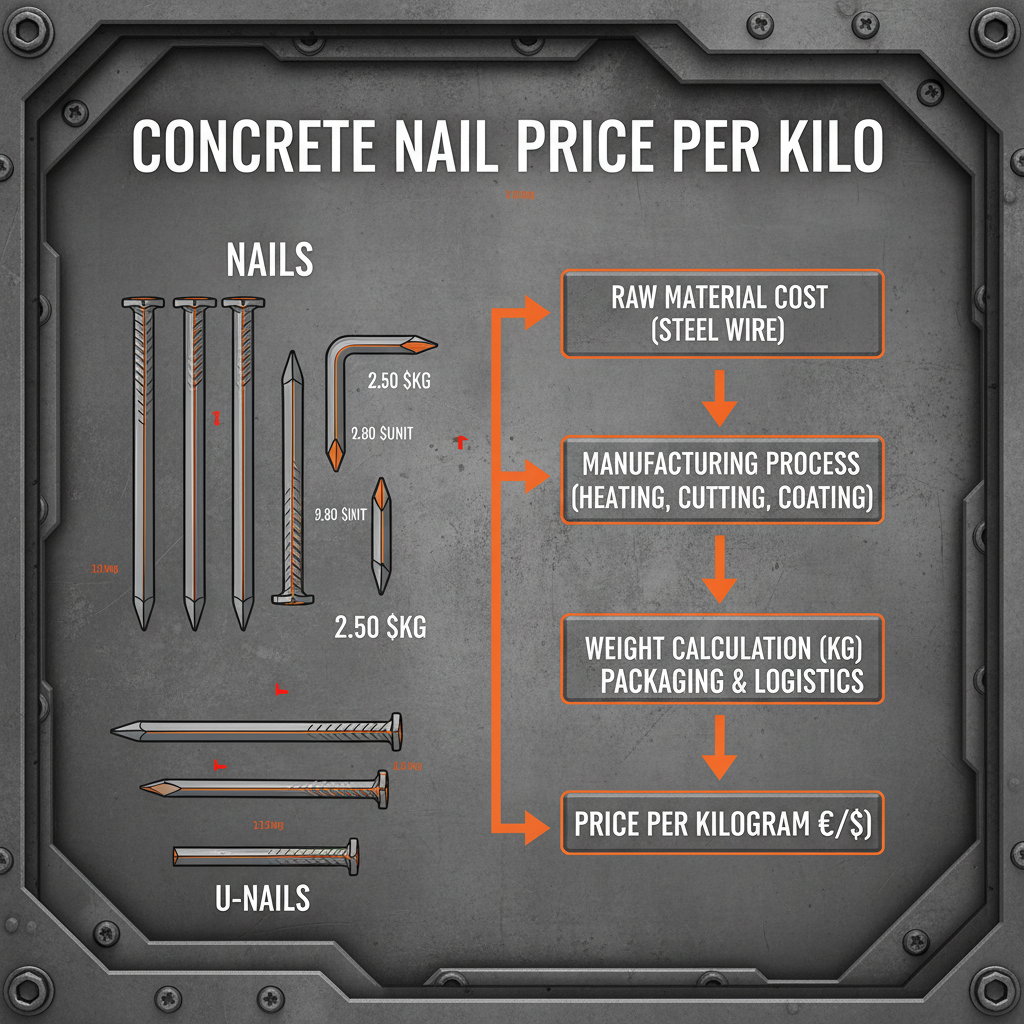
The price of concrete nails isn’t fixed; it fluctuates based on several key factors. The primary driver is the material composition: hardened steel is more expensive than carbon steel, offering superior strength and durability, and therefore commanding a higher price. Nail size and length significantly impact the price, with longer, thicker nails costing more per kilo. Manufacturing processes, including heat treatment and surface coating, add to the cost. Finally, market demand and supplier location influence pricing – higher demand and increased transportation costs will typically translate to a higher concrete nail price per kilo.
Key Considerations: Material quality, nail dimensions, manufacturing techniques, and market dynamics all play crucial roles in determining the price of concrete nails.
Types of Concrete Nails and Their Price Ranges
Different types of concrete nails cater to specific applications and come with varying price points. Hardened steel concrete nails, known for their exceptional strength, typically range from $5 to $10 per kilo. Carbon steel concrete nails, a more economical option, can be found for $3 to $6 per kilo. Cup-head concrete nails, designed to provide a flush finish, tend to be slightly more expensive than flat-head nails. Ring shank concrete nails, offering superior holding power, are usually priced at the higher end of the spectrum. Choosing the right nail type depends on the specific requirements of your project and your budget.
Concrete Nail Types & Price Guide:
• Hardened Steel: $5 - $10/kg
• Carbon Steel: $3 - $6/kg
• Cup Head: $6 - $9/kg
• Ring Shank: $7 - $12/kg
Concrete Nail Price Per Kilo: A Comparison of Suppliers
Shopping around is essential to secure the best concrete nail price per kilo. Different suppliers offer varying prices based on their sourcing, volume discounts, and shipping costs. Direct manufacturers like SXJ Staple often provide competitive pricing, while distributors may offer convenience and faster delivery. Comparing quotes from multiple sources will ensure you’re getting a fair deal. Consider factors beyond price, such as product quality, customer service, and delivery reliability.
Bulk Buying and Discounts
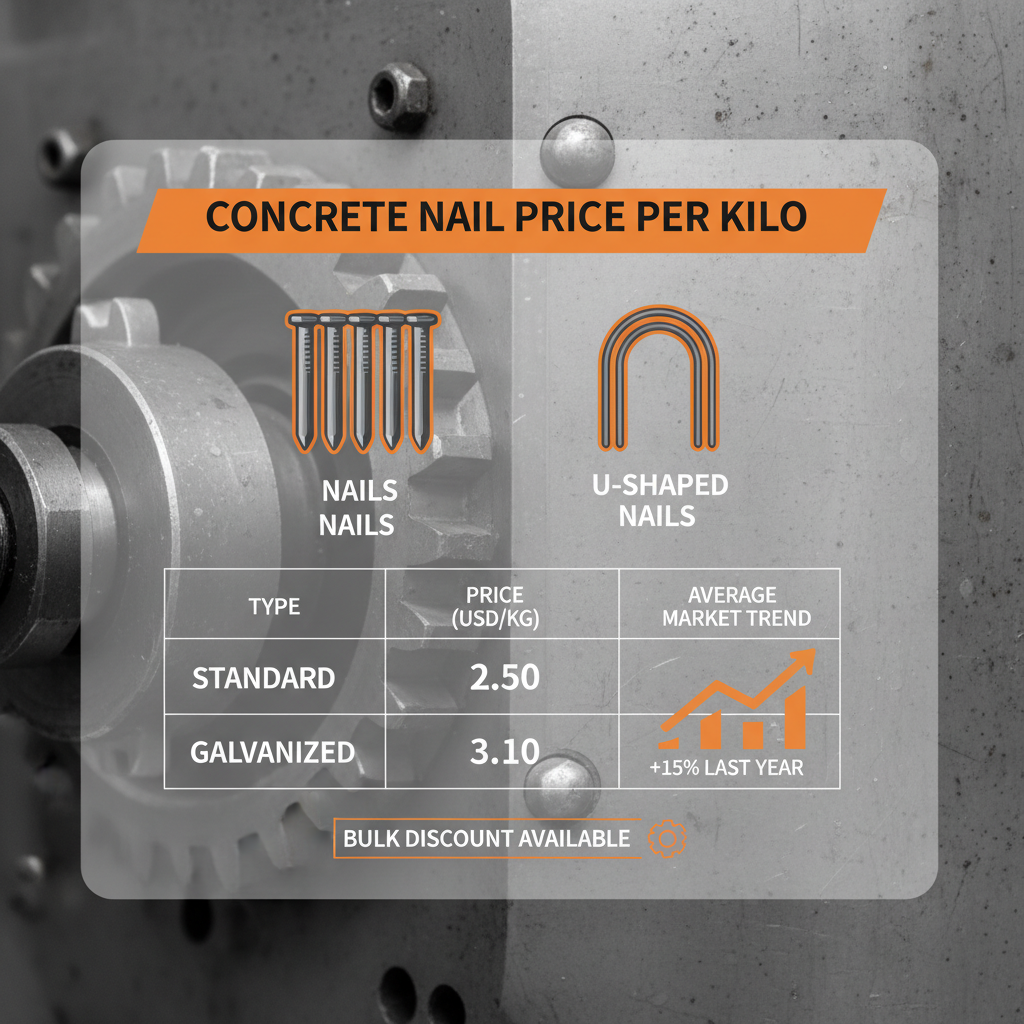
For large-scale projects, purchasing concrete nails in bulk can yield significant cost savings. Most suppliers offer tiered pricing, providing discounts based on the quantity ordered. Negotiating with suppliers is often possible, especially for repeat customers or substantial orders. Consider consolidating your orders to take advantage of bulk discounts and reduce shipping costs. Planning ahead and accurately estimating your nail requirements will help you maximize these savings. Remember, the concrete nail price per kilo decreases as your order volume increases.
Tips for Getting the Best Value on Concrete Nails
Beyond simply finding the lowest concrete nail price per kilo, consider long-term value. Investing in higher-quality nails can reduce the risk of failures and rework, ultimately saving you time and money. Look for nails with corrosion-resistant coatings to prevent rust and extend their lifespan. Check for certifications and quality assurance measures to ensure the nails meet industry standards. And finally, partner with a reputable supplier that offers excellent customer service and reliable delivery.
Conclusion: Making Informed Choices for Your Project
Understanding the factors influencing concrete nail price per kilo, exploring different supplier options, and prioritizing quality over simply the lowest price will enable you to make informed decisions and secure the best value for your construction or renovation project. SXJ Staple is a trusted partner for all your fastening needs.
Frequently Asked Questions (FAQs)
What is the typical lifespan of concrete nails?
The lifespan of concrete nails depends on environmental factors and the nail's coating. Nails with galvanized or ceramic coatings offer better corrosion resistance and will last longer. In dry, indoor environments, concrete nails can remain effective for decades. However, in harsh outdoor conditions, exposure to moisture and salt can accelerate corrosion, reducing their lifespan to a few years. Regularly inspect nails for signs of rust or deterioration and replace them as needed.
How do I determine the correct nail size for my project?
Selecting the correct nail size is crucial for a secure fastening. The nail should penetrate the concrete at least 1.5 to 2 inches for optimal holding power. Consider the thickness of the material being fastened and the depth of the concrete. A general rule is to choose a nail length that is at least twice the thickness of the material being attached. If unsure, consult with a construction professional or refer to the nail manufacturer’s guidelines.
Are there alternatives to concrete nails?
Yes, depending on the application, there are alternatives to concrete nails. Concrete screws, sleeve anchors, and wedge anchors are often used for heavier-duty applications requiring greater holding power. Powder-actuated fasteners are another option for high-speed fastening but require specialized tools and training. The best alternative depends on the specific requirements of your project, including load capacity, material type, and installation considerations.
-
The Ultimate Guide to Choosing 20mm Concrete Nails for ConstructionNewsApr.16,2026
-
Professional Guide to Using 2 inch concrete nails for ConstructionNewsApr.09,2026
-
Understanding the Strength and Versatility of 2 Concrete Nails for ProjectsNewsApr.07,2026
-
Understanding the Strength and Versatility of 2 1 2 Concrete Nails for ConstructionNewsApr.04,2026
-
Comprehensive Guide to Using 1 Inch Concrete Nails for Robust FasteningNewsMar.31,2026
-
The Ultimate Guide to 1 Concrete Nail Applications and Secure Fastening SolutionsNewsMar.28,2026