
Talk With Us
+86-13601661296
Email Address
admin@sxjbradnail.com
Talk With Us
+86-13601661296Email Address
admin@sxjbradnail.com
When sourcing fasteners for large-scale construction or furniture manufacturing, the distinction between a generic supplier and a dedicated common nails manufacturer often determines the structural integrity of the final project. The challenge for procurement managers is not simply finding a product that fits a dimension, but securing a consistent supply of nails that maintain precise tensile strength and coating uniformity across millions of units. In the demanding environment of the metal products industry, small variances in wire gauge or head alignment can lead to significant installation delays and material waste.
The importance of this selection process extends beyond simple fastening. High-quality common nails, alongside specialized products like Brad Nails, Coil Nails, and various industrial staples, form the backbone of modern woodworking and framing. For contractors, the primary concern is the balance between drive-ability—how easily the nail enters the substrate—and grip—how securely it remains once seated. Failure in either area results in "nail pops" or splitting wood, which increases labor costs and compromises the professional finish of the build.
Navigating the complexities of global fastener procurement requires a deep understanding of manufacturing capacities and quality control standards. By evaluating the technical specifications of the wire and the precision of the machining process, buyers can mitigate the risks of batch inconsistency. This guide analyzes the critical factors involved in selecting a reliable common nails manufacturer, focusing on how industrial scale and technical expertise translate into project reliability and long-term cost savings.


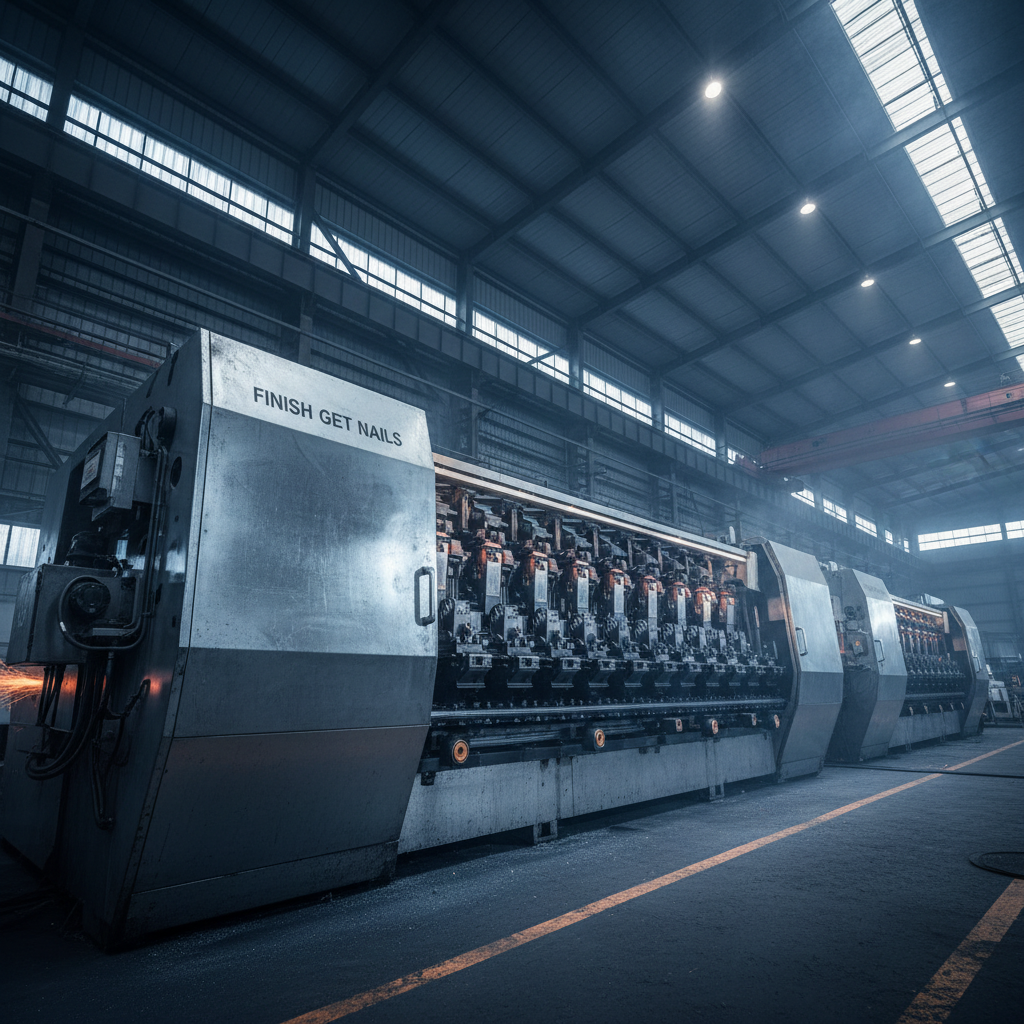
Industrial nail production is a high-precision process that transforms raw metal wire into standardized fasteners through a sequence of cutting, heading, and pointing. For a common nails manufacturer, the process begins with the selection of the correct wire grade, which determines the nail's flexibility and strength. The machinery must be calibrated to ensure that the shank diameter remains constant and the head is perfectly perpendicular to the shaft, preventing bending during high-velocity pneumatic driving.
Beyond the basic shape, the finishing process—such as galvanization or annealing—is critical for environmental resistance. In the case of black annealed wire, the heat treatment reduces the hardness of the steel, making the nails easier to drive without sacrificing significant holding power. This technical balance is what allows a factory to scale from a small workshop to a massive operation with hundreds of machines, as seen in the growth of the Baoding Yongwei Group subsidiary, SXJ Staple Company.
The performance of a nail is dictated by several key technical metrics that procurement teams must verify. First is the gauge consistency; for instance, 18 GA finish nails must maintain a precise diameter to ensure they fit perfectly in nail guns without jamming. Any deviation in the width or thickness (such as the 1.25mm width and 1.02mm thickness standard for F nails) can lead to mechanical failure in the tool or splitting of the workpiece.
Material composition and coating are the second pillar of quality. Galvanized coatings prevent oxidation in humid environments, while gold or customized finishes are often used for aesthetic purposes in interior design. The durability of these coatings is tested against abrasion and corrosive agents to ensure that the fastener does not leave rust streaks on the finished wood or fabric of the project.
Finally, head geometry and point sharpness are essential for operational efficiency. A well-formed 2.0mm head on an F-series nail provides the necessary surface area to hold the material firmly without sinking too deep into the soft wood. Simultaneously, the point must be engineered for a clean entry, reducing the risk of wood fiber displacement and maintaining the integrity of the substrate.
Value engineering in the fastener industry involves optimizing the choice of nail based on the specific load-bearing requirements and aesthetic goals of a project. Rather than using the strongest nail for every application, professional builders select the smallest diameter that provides the necessary security. This approach reduces material costs and minimizes the visible footprint of the fastener on the final product.
The core value of precision manufacturing lies in the reduction of secondary labor; when a nail is engineered to the exact gauge and length, the need for filling, sanding, and repairing nail holes is virtually eliminated, directly increasing the overall profit margin of the construction project.
Furthermore, the reliability of the supply chain adds significant intangible value. Working with a manufacturer that integrates production, sales, and one-stop services reduces the administrative overhead for the buyer. When a supplier can provide a comprehensive range—from Concrete Nails and Chip Board Screws to Hog Rings and Industrial Staples—the logistics of sourcing are streamlined, reducing the risk of project delays caused by missing components.
Comparing different nail types is essential for ensuring the right tool is used for the right task. For example, the difference between a finish nail and a common nail is found in the head size and the shank thickness. Finish nails are designed to be inconspicuous, whereas common nails are built for heavy-duty framing where the head is often hidden by other materials or is irrelevant to the aesthetic.
In the case of F-series nails, the length varies from 10mm to 50mm, each serving a specific depth of penetration. A 10mm nail is ideal for thin decorative trim, while a 50mm nail is required for securing thicker baseboards or furniture frames. The following data illustrates the relative application suitability of different lengths based on material thickness.
Precision fasteners are utilized across a diverse array of sectors, from residential construction to specialized upholstery. In the furniture industry, 18 GA finish nails are a staple for sofa manufacturing and intricate decorations. Their small diameter allows for a seamless and professional look, ensuring that the fasteners do not disrupt the fabric or the delicate grain of softwoods.
In industrial settings, products like Carton Closing Staples and Hog Rings are used for high-volume packaging and assembly. These applications require extreme consistency in dimensions to ensure compatibility with automated machinery. A common nails manufacturer that can provide both delicate finish nails and heavy-duty industrial staples offers a strategic advantage to companies that manage multiple product lines.
The fastening industry is shifting toward materials that offer higher corrosion resistance and lower environmental impact. There is a growing demand for customized coatings that can withstand extreme weather conditions in regions like North Africa and Southeast Asia. This evolution is driven by the need for infrastructure that requires less maintenance over its lifecycle.
Another significant trend is the integration of one-stop service models. Modern buyers no longer want to manage twenty different vendors for screws, nails, and staples. They prefer partners who can handle the entire metal product ecosystem. This trend has pushed manufacturers to expand their production capabilities, moving from single-machine workshops to massive complexes with hundreds of machines and specialized divisions.
Finally, the precision of automated production is reducing the "zero complaint" quality gap. With the adoption of advanced monitoring systems, manufacturers can now ensure that every strip of 100 nails is identical. This level of consistency is vital for the global export market, where international standards for safety and performance are strictly enforced.
Procuring fasteners at scale often presents challenges related to lead times and quality variance. The most common issue is the "batch effect," where the first shipment meets specifications but subsequent loads vary in coating thickness or head alignment. To solve this, buyers should prioritize manufacturers with a transparent production history and a large-scale facility capable of consistent output.
Another challenge is the compatibility between the fastener and the tool. Using a nail with an incorrect gauge can damage the firing pin of a pneumatic nailer. The solution lies in adhering to strict technical drawings and requesting samples for tool testing before placing a bulk order. Detailed parameters, such as the 18 GA specification for finish nails, must be verified against the tool's manual.
Lastly, managing the total cost of ownership requires looking beyond the per-unit price. Low-cost nails that bend or cause wood splitting increase labor time and material waste. By investing in high-precision products from a reputable manufacturer, companies can reduce their waste rates and improve the overall efficiency of their production line.
| Product Type | Primary Material | Optimal Use Case | Key Advantage |
|---|---|---|---|
| F Nail (18GA) | Galvanized Steel | Sofa & Decoration | Seamless Finish |
| Common Nail | Annealed Steel | General Framing | High Grip Strength |
| Concrete Nail | Hardened Steel | Masonry Fixing | High Penetration |
| Brad Nail | Steel Wire | Trim Work | Minimal Splitting |
| Coil Nail | Galvanized Steel | Pallet/Crating | High-Speed Loading |
| Chip Board Screw | Carbon Steel | Cabinetry | Superior Torque |
A high-quality manufacturer is defined by their ability to maintain strict dimensional tolerances and coating uniformity across large volumes. This includes using precision-calibrated machinery to ensure the gauge, head diameter, and point sharpness are consistent, which prevents tool jamming and material splitting during installation.
The choice depends on the required holding power and the thickness of the material. F nails, typically 18 gauge, are better for slightly heavier decorative tasks and furniture upholstery where a more secure hold is needed. Brad nails are thinner and leave an even smaller hole, making them ideal for very delicate trim where invisibility is the priority.
The 18 GA specification ensures the nail is compatible with standard pneumatic finish nailers. If the gauge is off by even a fraction of a millimeter, it can either cause the nail to be loose in the magazine or, worse, cause the tool to jam, leading to costly downtime on a professional job site.
Galvanized nails are coated in zinc to prevent rust, making them essential for outdoor use or humid environments. Annealed nails have been heat-treated to be softer, which makes them easier to drive into the wood by hand or tool without bending, making them ideal for indoor framing and general construction.
Yes, integrated manufacturers like SXJ Staple Company provide a full spectrum of metal fasteners, including nails, staples, and screws. This one-stop service is highly beneficial for procurement managers as it reduces shipping costs, simplifies vendor management, and ensures a consistent level of quality across all fastening components.
Preventing nail pops requires using the correct nail length for the substrate and ensuring the manufacturer uses a consistent wire gauge. If the nail is too short or the shank is inconsistent, it may not grip the stud properly, leading to the nail backing out as the wood shrinks and expands over time.
Selecting a common nails manufacturer is a strategic decision that impacts everything from the speed of assembly to the longevity of the finished structure. By focusing on technical specifications like gauge precision, coating durability, and the manufacturer's production scale, buyers can move beyond simple price comparisons to a value-based procurement model. The integration of a comprehensive product line—encompassing nails, staples, and specialized screws—further enhances operational efficiency by streamlining the supply chain.
For companies seeking a reliable partner in the metal products industry, prioritizing a manufacturer with a proven track record of global exports and high-capacity production is essential. Whether you are sourcing for residential furniture or industrial packaging, ensuring your fasteners meet strict industrial standards is the best way to guarantee a professional result. To explore a full range of precision fasteners and industrial staples, you can visit the official portal at www.sxj-staple.com.