
Talk With Us
+86-13601661296
Email Address
admin@sxjbradnail.com
Talk With Us
+86-13601661296Email Address
admin@sxjbradnail.com
Procuring fastening materials often leads to a common friction point: the volatility of the common nails price. For industrial buyers and construction managers, the cost of these basic components can fluctuate based on raw steel indices, coating requirements, and logistical shifts.
Understanding the pricing mechanism is not merely about finding the lowest digit but evaluating the total cost of ownership. Factors such as tensile strength, corrosion resistance, and batch consistency determine whether a cheaper nail saves money or creates expensive failures during structural assembly.
This analysis examines the variables influencing nail costs, the technical trade-offs between different fastener types, and a framework for optimizing procurement in the current metal products market.


The pricing of common nails is primarily tethered to the global steel market. Since wire rods are the primary raw material, any surge in iron ore or energy costs during the smelting process directly impacts the unit price. However, volume plays a critical role; large-scale manufacturers can leverage economies of scale to stabilize costs for long-term partners.
Beyond raw materials, the cost is influenced by the "treatment" phase. For instance, nails requiring specific annealing or galvanization for rust prevention command a premium over bright finished nails. Logistical overheads, including shipping and bulk packaging, often constitute a significant percentage of the final landed cost.
The perceived value of a nail is determined by its ability to hold under stress without bending or shearing. Technical specifications such as shank diameter and length are the first tier of pricing. As the volume of steel per unit increases, the price scales linearly, but precision tolerances add a layer of complexity. High-precision nails with consistent head diameters are essential for automated driving systems.
The shank design also plays a role. Smooth shanks are standard, but ring-shank or screw-shank nails, which offer superior withdrawal resistance, require more complex machinery and longer production cycles. This increased manufacturing time reflects in the higher price point compared to traditional common nails.
Furthermore, the head geometry—whether it is a flat head for flush finishing or a countersunk design—impacts the tooling cost. Industrial fasteners must meet specific hardness standards, achieved through controlled heat treatments that balance rigidity with the flexibility needed to prevent snapping during installation.
Material selection is the most decisive factor in long-term performance. While basic carbon steel is sufficient for indoor dry-framing, outdoor or industrial environments demand specialized alloys or coatings. The transition from untreated steel to galvanized or stainless steel can significantly alter the budget.
Material durability is a cost-offsetting investment; using low-grade nails in corrosive environments leads to structural degradation and replacement costs that far exceed the initial savings on the unit price.
Specialized products like Concrete Nails require higher carbon content and specific quenching processes to ensure they can penetrate masonry without bending. Similarly, the use of Black Annealed Wire for specific nail types provides a balance of strength and ductility, making them easier to drive in heavy-duty applications.
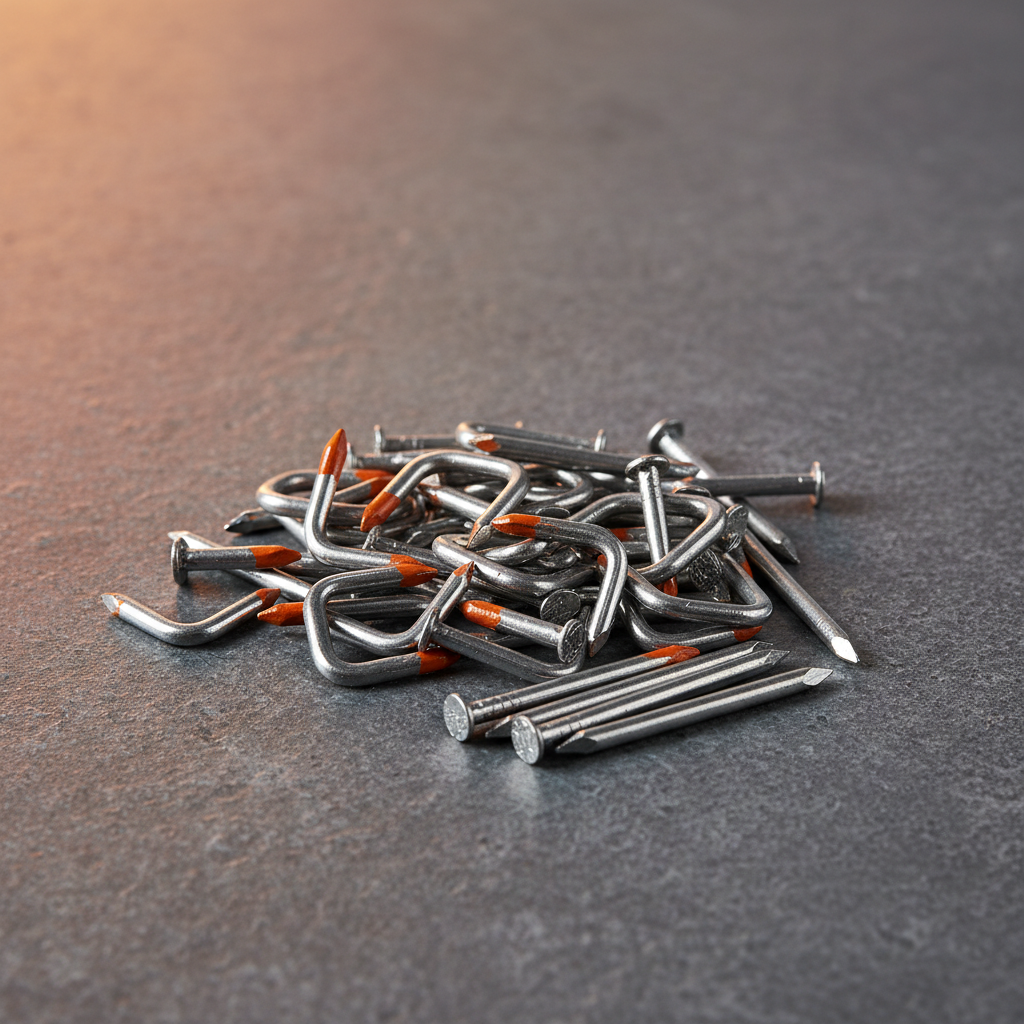
Different fasteners within the metal products category carry different price premiums based on their manufacturing complexity. While common nails are the baseline, specialized items like Coil Nails or Brad Nails involve higher precision engineering for compatibility with pneumatic tools.
The following index illustrates the relative cost influence based on manufacturing complexity and material requirements, where a higher value indicates a more significant price premium over basic common nails.
In a typical industrial setting, the selection process should begin with the substrate. For heavy timber framing, the priority is shear strength and a secure grip, making high-tensile common nails the primary choice. However, for furniture and cabinetry, the focus shifts to aesthetics and minimal surface disruption, where Finish Nails or Brad Nails are utilized.
Procurement managers often face a trade-off between bulk buying and just-in-time delivery. While buying in massive quantities reduces the unit common nails price, it increases warehousing costs and the risk of oxidation if the storage environment is not humidity-controlled.
The shift toward automated production has redefined how fasteners are priced. Modern plants, such as those within the Baoding Yongwei Group ecosystem, utilize high-speed machinery that reduces labor costs per thousand units. This allows for more competitive pricing while maintaining strict adherence to international quality standards.
Another emerging trend is the integration of "one-stop" service models. By combining the production of nails, staples, and screws under one organizational umbrella, manufacturers can optimize raw material sourcing (such as the same grade of steel wire for both nails and staples), thereby reducing waste and passing those savings to the customer.
Global logistics also play a pivotal role. With the expansion of shipping hubs and improved containerization, manufacturers in China are able to serve markets in South America, Europe, and Southeast Asia more efficiently, mitigating the impact of transport costs on the final retail price.
To avoid the pitfalls of low-cost, low-quality fasteners, buyers should employ a multidimensional evaluation matrix. This involves comparing the unit price against the expected lifespan and the failure rate of the fastener in a given application.
A common error in procurement is focusing solely on the per-kilogram price. However, the "cost of failure"—the time and material spent replacing a rusted or bent nail—often dwarfs the initial procurement cost. This is especially true for high-load structural applications.
The table below provides a relative suitability and consideration framework for different fastener types, helping buyers align their technical requirements with their budget.
| Fastener Type | Primary Use Case | Relative Cost | Key Selection Factor |
|---|---|---|---|
| Common Nails | General Framing | Low | Tensile Strength |
| Concrete Nails | Masonry/Concrete | Medium | Hardness/Quenching |
| Brad Nails | Trim/Cabinetry | Medium-High | Precision/Diameter |
| Finish Nails | Fine Woodwork | Medium | Head Aesthetics |
| Coil Nails | Pallets/Crating | High | Tool Compatibility |
| Stainless Nails | Marine/Outdoor | Very High | Corrosion Grade |
The primary driver is the global price of steel wire rods. Since nails are a downstream product of the steel industry, changes in iron ore costs, energy prices for smelting, and trade tariffs on metal imports create direct volatility. Additionally, seasonal demand in the construction industry can cause short-term price spikes during peak building months.
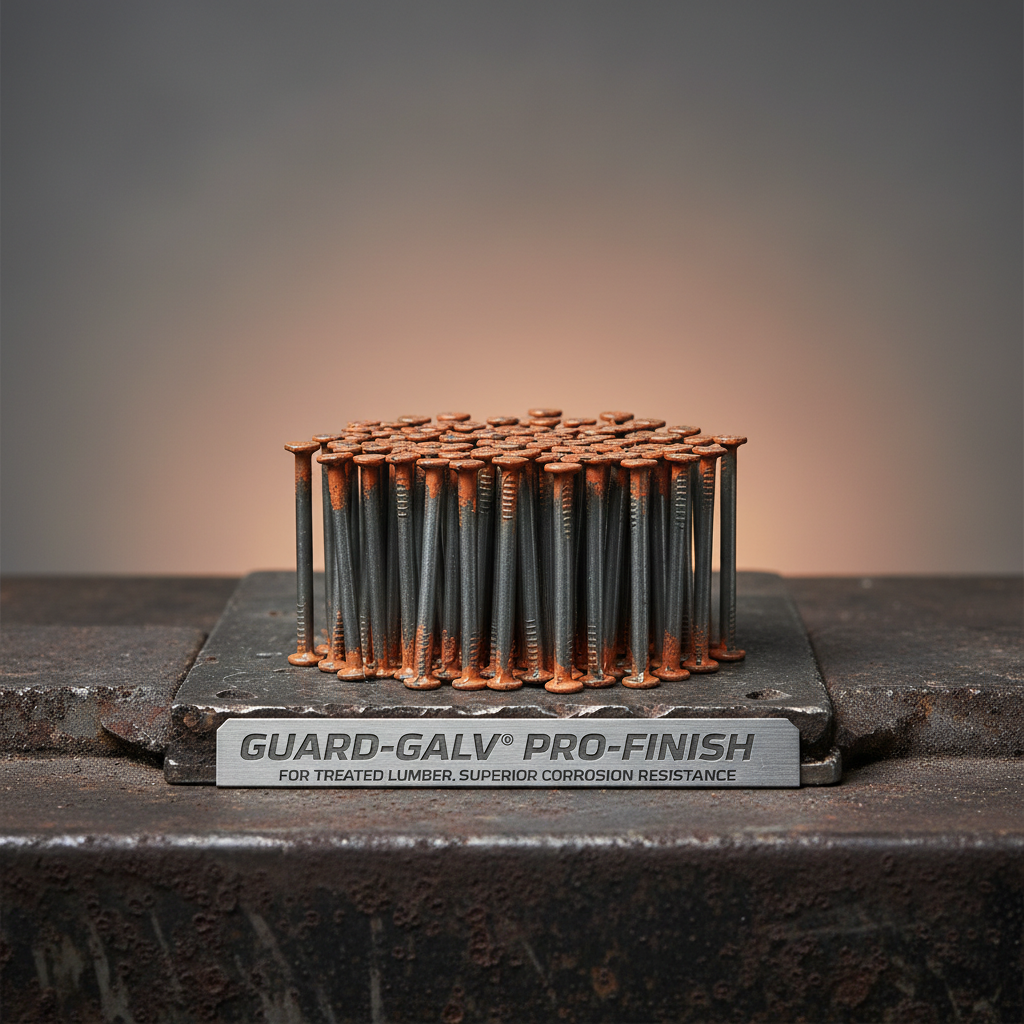
Galvanization adds a protective zinc layer to prevent rust, requiring an additional chemical processing step and higher energy consumption. This typically increases the price by 15% to 30% compared to bright finished nails. While more expensive, it is a necessary investment for outdoor projects to prevent structural failure due to oxidation.
Material grade should always take priority over unit price in industrial applications. A nail that is 10% cheaper but has a higher failure rate or bends during installation can lead to significant labor losses and structural risks. Always align the material specification (e.g., carbon steel vs. stainless) with the environment's corrosivity and the load requirements.
Specialty gun nails, such as coil or brad nails, are priced higher because they require extreme precision in length and diameter to function within pneumatic tools without jamming. They are often sold in strips or coils, which adds the cost of the binding agent and specialized packaging, whereas common nails are typically sold by weight in bulk.
Bulk purchasing reduces the per-unit cost by amortizing the fixed costs of setup, tooling, and shipping across a larger volume. Manufacturers can optimize their production runs for a single specification, reducing downtime. However, buyers must weigh these savings against the cost of storage and the risk of material degradation if stored in humid conditions.
Yes. Large-scale manufacturing hubs, particularly in China, offer a high balance of quality and cost due to integrated supply chains. Companies that control multiple stages—from wire drawing to final packaging—can offer more stable pricing and tighter quality control than smaller workshops that outsource parts of the process.
Navigating the common nails price requires a shift from a "lowest price" mindset to a "highest value" strategy. By understanding the intersection of raw material trends, technical specifications, and application-specific needs, procurement professionals can secure fasteners that ensure structural integrity without overpaying for unnecessary features.
Ultimately, the reliability of a project depends on the smallest components. Partnering with manufacturers who prioritize consistent material grading and transparent pricing allows businesses to mitigate risk and optimize their supply chain for long-term stability.