In the demanding world of heavy-duty construction and outdoor timber framing, the integrity of a structure often depends on the smallest components. Among these, 90mm galvanised ring shank nails stand out as a critical engineering solution, designed specifically to provide superior grip and long-term corrosion resistance in harsh environments. Whether it is for decking, fencing, or structural cladding, choosing the right fastener is not just about convenience—it is about ensuring the safety and longevity of the build.
Globally, the shift toward sustainable building practices and the use of pressure-treated timbers has increased the demand for fasteners that can withstand chemical preservatives and moisture. Traditional smooth-shank nails often fail due to "nail pop" or withdrawal caused by the natural expansion and contraction of wood. This is where the specialized design of ring shank nails provides a mechanical advantage, locking the fastener into the wood fibers to create a bond that is significantly stronger than standard alternatives.
Understanding the technical specifications of 90mm galvanised ring shank nails allows contractors and engineers to optimize their material costs while reducing maintenance cycles. By combining a 90mm length for deep penetration with a hot-dip galvanised coating for rust prevention, these nails address the dual challenge of structural stability and environmental degradation, making them an indispensable asset in the global fasteners market.
The Technical Engineering of 90mm Galvanised Ring Shank Nails
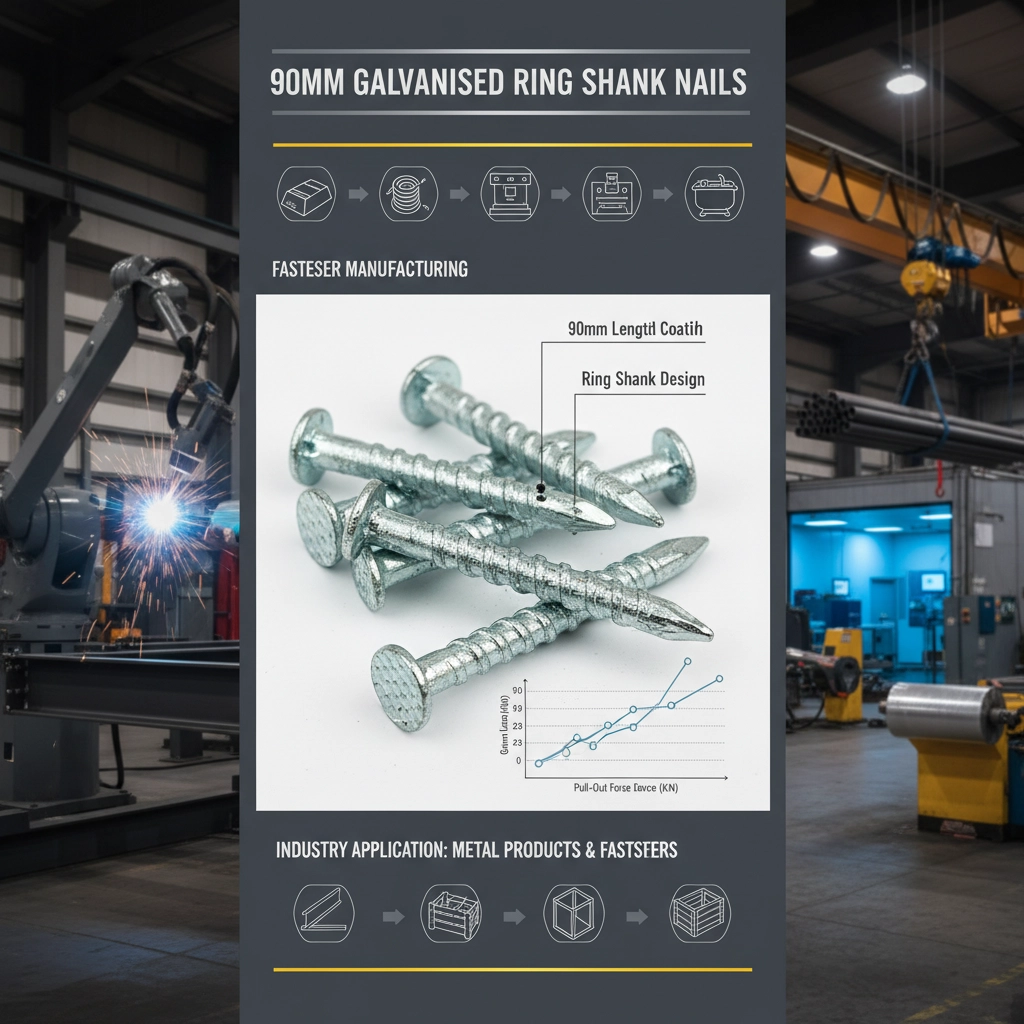
The primary innovation of 90mm galvanised ring shank nails lies in the geometry of the shank. Unlike smooth nails, the ring shank features a series of raised ridges or "rings" that act like miniature threads. When driven into timber, these rings compress the wood fibers, which then spring back around the rings, effectively locking the nail in place. This creates a mechanical anchor that drastically increases the withdrawal resistance, making it nearly impossible for the nail to pull out without catastrophic failure of the wood itself.
Furthermore, the 90mm length is strategically chosen for structural applications where deep penetration is required to bridge thick beams or secure heavy-duty cladding. When combined with a hot-dip galvanisation process, the steel is encased in a protective layer of zinc. This prevents the onset of oxidation, ensuring that the structural integrity of the joint is not compromised by rust, even when exposed to rain, humidity, or the corrosive chemicals found in pressure-treated wood.
Global Market Relevance and Industrial Standards
In the context of global infrastructure, the reliance on 90mm galvanised ring shank nails has grown as urban development expands into coastal and high-humidity regions. According to ISO standards for fasteners, the quality of the zinc coating and the precision of the shank rings are paramount. In regions like Southeast Asia or Northern Europe, where weather extremes are common, the industry has moved away from basic steel nails toward galvanised ring-shank variations to prevent the premature collapse of outdoor structures.
The challenge facing the modern construction industry is the increasing volatility of timber quality. As sustainable forestry leads to the use of a wider variety of wood species, some of which are softer or more prone to warping, the need for a "fail-safe" fastener becomes evident. Standard nails often lose their grip as wood dries and shrinks; however, the ring shank design compensates for this movement, maintaining a tight hold that ensures the safety of the occupants and the durability of the project.
From a procurement perspective, these nails represent a strategic investment. While the initial cost per unit may be higher than smooth nails, the reduction in labor costs for repairs and the extended lifecycle of the installation provide a much lower total cost of ownership. This economic logic is driving the adoption of 90mm galvanised ring shank nails in large-scale government housing projects and industrial warehouse construction worldwide.
Core Components of High-Performance Fasteners
The effectiveness of 90mm galvanised ring shank nails is derived from three core components: the alloy steel core, the ringed geometry, and the galvanised exterior. The steel core provides the necessary shear strength to withstand lateral loads, ensuring that the nail does not bend or snap under the weight of the structure.
The "Ring" aspect is the most critical for grip. By creating a series of interlocking points within the timber, 90mm galvanised ring shank nails offer a holding power that is often 3 to 4 times greater than that of smooth nails. This is essential for applications such as joist hangers or outdoor decking where vibration and movement are constant.
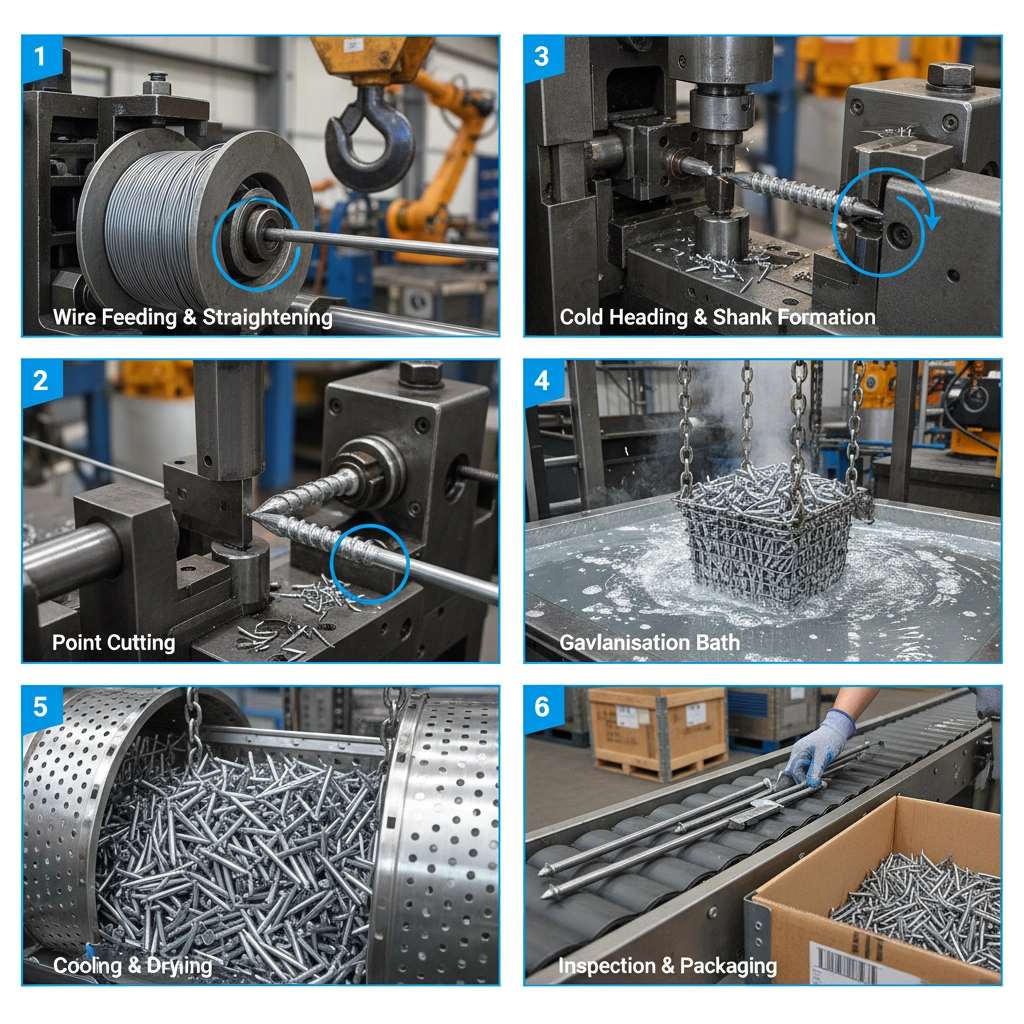
Finally, the galvanisation process involves immersing the nail in molten zinc. This doesn't just coat the surface; it creates a metallurgical bond. For 90mm galvanised ring shank nails, this means the nail is protected from the inside out, preventing "creep" corrosion that often starts at the head or the point and works its way up the shank.
Comparative Performance and Load Capacity
When analyzing the performance of fasteners, withdrawal force is the primary metric. 90mm galvanised ring shank nails consistently outperform smooth nails and screw-shank nails in long-term retention tests. The rings act as mechanical barriers that resist the sliding motion of the nail, which is particularly important in high-wind areas where structures are subjected to repetitive uplifting forces.
Moreover, the 90mm length ensures that the fastener penetrates deep into the supporting member, maximizing the surface area of the rings in contact with the wood. This distribution of force prevents the wood from splitting around the nail, a common failure point in shorter or smoother fasteners.
Holding Power Comparison of 90mm Galvanised Ring Shank Nails
Global Applications and Real-World Use Cases
In real-world applications, 90mm galvanised ring shank nails are the gold standard for outdoor decking and heavy-duty fencing. For instance, in the residential construction markets of North America and Australia, these nails are used to secure deck boards to joists. The combination of the ring shank's grip and the galvanised coating prevents the boards from warping and the nails from rusting through, even when exposed to constant saltwater spray in coastal regions.
Beyond residential use, these fasteners are critical in industrial zones for the construction of temporary warehouses and scaffolding platforms. In post-disaster relief operations, where rapid deployment of semi-permanent shelters is required, 90mm galvanised ring shank nails allow for fast assembly without the need for complex power tools, while providing a level of stability that ensures the shelters can withstand adverse weather conditions.
Long-Term Value and Sustainability Benefits
The long-term value of utilizing 90mm galvanised ring shank nails is rooted in the concept of "build it once, build it right." By preventing the common issue of nail withdrawal, these fasteners significantly extend the maintenance cycle of timber structures. This reduces the need for frequent replacements of boards and beams, which in turn lowers the overall consumption of timber—a key factor in sustainable forest management and reducing the carbon footprint of construction.
From a safety perspective, the reliability of ring shank nails provides peace of mind. Whether it is a balcony, a staircase, or a structural wall, the knowledge that the fasteners are mechanically locked into the substrate reduces the risk of structural failure. This reliability builds trust between the contractor and the client, ensuring that the finished project meets high safety standards and building codes.
Furthermore, the use of high-quality galvanised steel means that the fasteners themselves do not need to be replaced for decades. This durability reflects a shift toward circular economy principles, where the focus is on longevity and waste reduction rather than the "planned obsolescence" often found in lower-grade building materials. Using 90mm galvanised ring shank nails is therefore both an economic and an ethical choice.
Future Innovations in Fastening Technology
As we look toward the future, the evolution of 90mm galvanised ring shank nails is being driven by advancements in material science and automation. We are seeing the introduction of hybrid coatings—combining zinc with organic polymers—that provide even greater resistance to the highly acidic chemicals used in modern pressure-treated lumbers. These "next-gen" coatings ensure that the nail remains pristine even in the most aggressive chemical environments.
Digital transformation is also impacting the manufacturing process. Precision rolling technology now allows for more consistent ring spacing and depth, ensuring that every nail in a batch performs identically. This level of precision is critical for automated nailing systems used in prefabricated housing, where machines drive thousands of 90mm galvanised ring shank nails per hour with exact force and depth.
Sustainability remains the core driver. Research is currently underway to explore recycled steel sources for fastener production without sacrificing the tensile strength required for structural applications. The goal is to create a fully carbon-neutral fastener that maintains the legendary grip and protection of the traditional ring shank design.
Analysis of 90mm Galvanised Ring Shank Nails Performance Factors
| Feature Dimension |
Impact on Longevity |
Installation Effort |
Overall Rating |
| Hot-Dip Galvanising |
Extreme (Prevents Rust) |
Low |
10/10 |
| Ring Shank Geometry |
High (Prevents Withdrawal) |
Medium |
9/10 |
| 90mm Length |
High (Deep Anchor) |
Medium |
8/10 |
| Alloy Steel Base |
Medium (Shear Strength) |
Low |
9/10 |
| Head Diameter |
Medium (Surface Grip) |
Low |
7/10 |
| Point Sharpness |
Low (Easy Entry) |
Very Low |
8/10 |
FAQS
The primary reason is the holding power. Ring shank nails feature ridges that lock into the wood fibers, providing significantly higher withdrawal resistance. Combined with the galvanised coating, they prevent both the nail from pulling out and the steel from rusting, which is essential for outdoor structures like decks and fences where smooth nails would likely fail over time.
Yes, they are specifically designed for this. Pressure-treated wood often contains corrosive chemicals (like ACQ) that can eat through standard steel. The hot-dip galvanised coating on these nails provides a protective barrier that resists these chemicals, ensuring the fastener does not corrode from the inside out.
Removing ring shank nails is significantly more difficult than removing smooth nails because of the mechanical lock they create. It is often recommended to use a pry bar or a specialized nail puller. Because they grip so tightly, attempting to pull them out may cause more damage to the timber than a smooth nail would, so precise placement is key.
Depending on the environment, a structure using high-quality 90mm galvanised ring shank nails can last 20 to 50 years without fastener failure. In coastal areas with high salt content, the lifespan may be slightly shorter, but it will still vastly outperform non-galvanised alternatives which can rust through in as little as 5 years.
While the points are sharp, the increased friction caused by the ring shank can sometimes lead to wood splitting, especially near the edges of a board. Pre-drilling a small pilot hole is highly recommended for hardwoods or when working close to the end of a timber piece to ensure a clean installation without cracking the material.
Quality galvanised nails should have a consistent, matte grey appearance without obvious flakes or bare spots. You can check for certification markers (like ASTM or ISO) from the supplier. A high-quality hot-dip process ensures the zinc is bonded to the steel, whereas a cheap electro-galvanised nail will have a shiny, thin coating that wears off quickly.
Conclusion
In summary, 90mm galvanised ring shank nails represent the perfect intersection of mechanical grip and chemical protection. By solving the two most common points of failure in timber construction—withdrawal and corrosion—these fasteners provide a reliable foundation for everything from backyard decking to industrial shelters. Their ability to lock into wood fibers while resisting the elements makes them a superior choice for any professional looking to minimize maintenance and maximize structural safety.
Looking ahead, as the construction industry continues to prioritize sustainability and long-term durability, the adoption of specialized fasteners will only increase. We encourage engineers and contractors to move away from generic hardware and invest in high-performance solutions that guarantee the integrity of their work. For those seeking the highest industrial standards in fastening technology, visit our website: www.sxj-staple.com