
Talk With Us
+86-13601661296
Email Address
admin@sxjbradnail.com
Talk With Us
+86-13601661296Email Address
admin@sxjbradnail.com
Finish nails for siding represent a critical component in modern construction and home improvement, providing a discreet yet robust fastening solution for exterior finishes. Their widespread use stems from their ability to minimize visual impact while ensuring long-lasting adhesion, contributing to both the aesthetic appeal and structural integrity of buildings. Understanding the nuances of finish nails—their materials, gauges, and application techniques—is paramount for professionals and DIY enthusiasts alike, impacting project quality and longevity. The selection of appropriate finish nails for siding is often the deciding factor between a beautifully completed project and a premature failure.
Globally, the demand for durable and aesthetically pleasing siding solutions is consistently increasing, fueled by urbanization, rising housing construction, and a growing emphasis on home renovation. Regions experiencing rapid development, such as Asia-Pacific and Latin America, present significant growth opportunities for finish nail manufacturers. However, challenges exist in maintaining consistent quality control across global supply chains and adapting to varying building codes and environmental conditions. This underscores the need for standardized practices and innovative solutions within the finish nails for siding industry.
The increasing focus on sustainable building practices also drives the need for environmentally responsible finish nail production and sourcing. As consumers become more conscious of their environmental footprint, manufacturers are responding by developing eco-friendly alternatives and adopting more sustainable manufacturing processes.
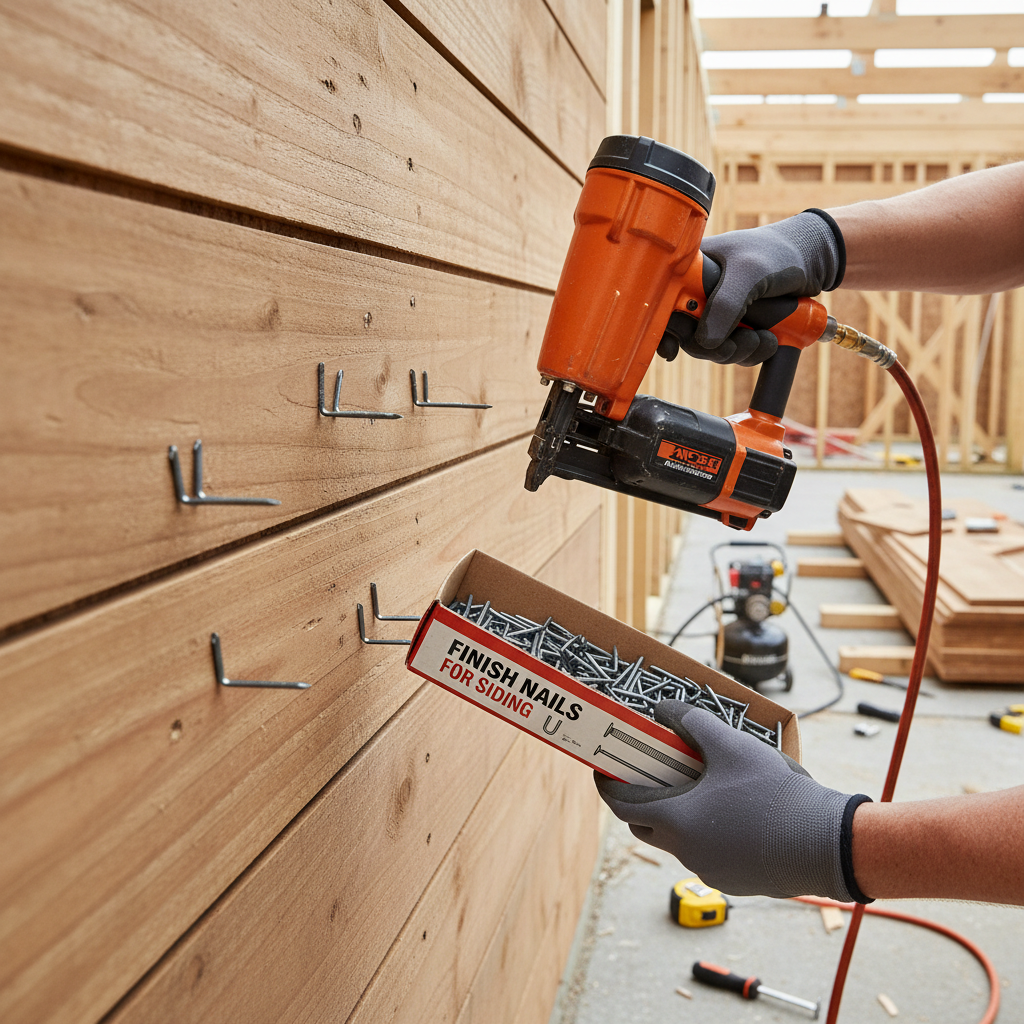
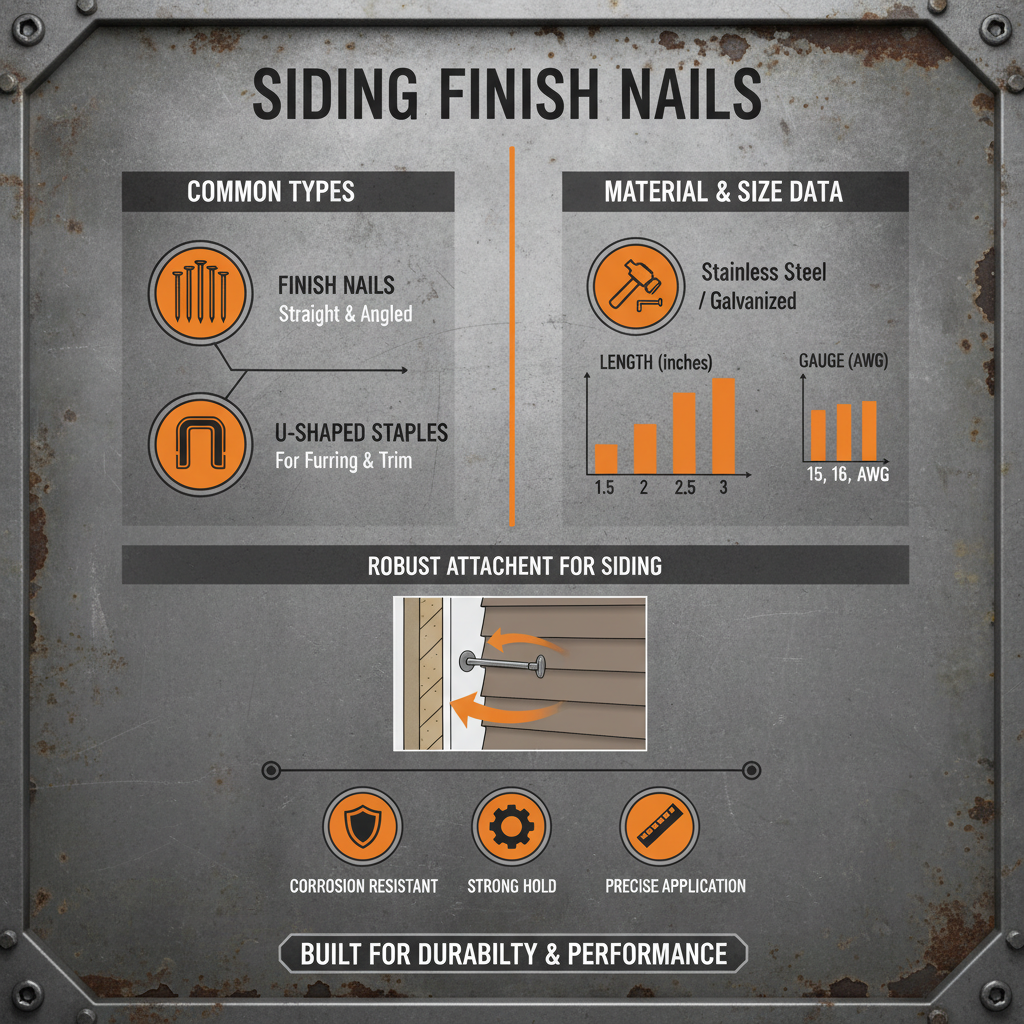
Finish nails for siding are specifically designed for securing exterior siding materials such as wood, vinyl, fiber cement, and composite options. Unlike common nails, finish nails feature a smaller head that can be easily countersunk and concealed, resulting in a clean and professional aesthetic. The ability to minimize visible fasteners is a key advantage, enhancing the overall appearance of the finished siding project.
These nails play a crucial role in the structural integrity of siding installations, providing a secure hold against wind, rain, and other environmental elements. Proper installation is vital, requiring a keen understanding of nail gauge, length, and appropriate fastening techniques. The right finish nails for siding are the foundation of a long-lasting and visually appealing exterior.
For pine siding, which is a relatively soft wood, a gauge of 16 or 18 is generally recommended. This provides adequate holding power without causing excessive splitting. Using a smaller gauge (higher number) reduces the risk of damage, while ensuring a secure fastening. However, the exact gauge depends on the thickness of the siding and the underlying framing. Always test in an inconspicuous area first.
Nail pop-up is often caused by wood expansion and contraction due to moisture changes. To minimize this, ensure you’re using the correct nail length (at least 1 inch penetration into the framing). Using slightly ring-shanked nails can also improve holding power. Properly spacing the nails based on siding manufacturer recommendations is crucial. Finally, consider the wood's moisture content before installation.
Both galvanized and stainless steel nails offer corrosion resistance, but stainless steel provides superior protection, especially in harsh coastal environments or with wood treated with certain preservatives. Galvanized nails are a more cost-effective option for general use, while stainless steel is a better investment for long-term durability and resistance to severe corrosion.
Yes, pneumatic nailers are commonly used with finish nails for siding, significantly increasing installation speed and efficiency. Ensure your nailer is compatible with the gauge and length of the finish nails you are using. Adjust the air pressure and depth setting to achieve the proper nail penetration. Proper tool maintenance is also essential for consistent performance.
The length of the finish nail should allow for at least 1 inch of penetration into the framing member behind the siding. Measure the thickness of your siding and add 1 inch to determine the appropriate nail length. If you’re installing siding over a weather barrier, account for its thickness as well. Using nails that are too short will result in a weak hold, while nails that are too long may protrude through the back of the framing.
Ring shank nails have rings along their shank, which provide increased holding power by biting into the wood fibers. They are excellent for siding applications, especially in situations where the wood is prone to movement or splitting. While slightly more expensive than smooth shank nails, their superior holding power often justifies the added cost, resulting in a more durable and long-lasting installation.
In summary, finish nails for siding are indispensable components of quality construction and renovation projects, offering a balance of aesthetic appeal, durability, and cost-effectiveness. From selecting the appropriate gauge and length to utilizing modern installation techniques, understanding the nuances of these fasteners is essential for achieving long-lasting and visually appealing results. The right finish nails for siding contribute significantly to the overall structural integrity and longevity of any exterior project.
Looking ahead, advancements in materials science and coating technologies promise even more durable and corrosion-resistant finish nails. Embracing sustainable sourcing practices and adopting innovative fastening systems will further enhance the value and environmental responsibility of finish nail applications in the future. For reliable and high-quality finish nails for your next siding project, visit our website: www.sxj-staple.com.