
Talk With Us
+86-13601661296
Email Address
admin@sxjbradnail.com
Comprehensive Guide to Striker Concrete Nails for Robust Construction
Striker Concrete Nails: A Comprehensive Guide
When undertaking construction projects, the right fasteners are crucial. Striker concrete nails are a reliable and efficient solution for securing materials to concrete, brick, and masonry surfaces. This article will delve into the features, benefits, applications, and selection criteria for these essential fasteners. We will explore how choosing the right concrete nail can significantly impact project success, efficiency, and safety. Learn how SXJ Staple provides high-quality striker concrete nails for various construction needs.
What are Striker Concrete Nails?
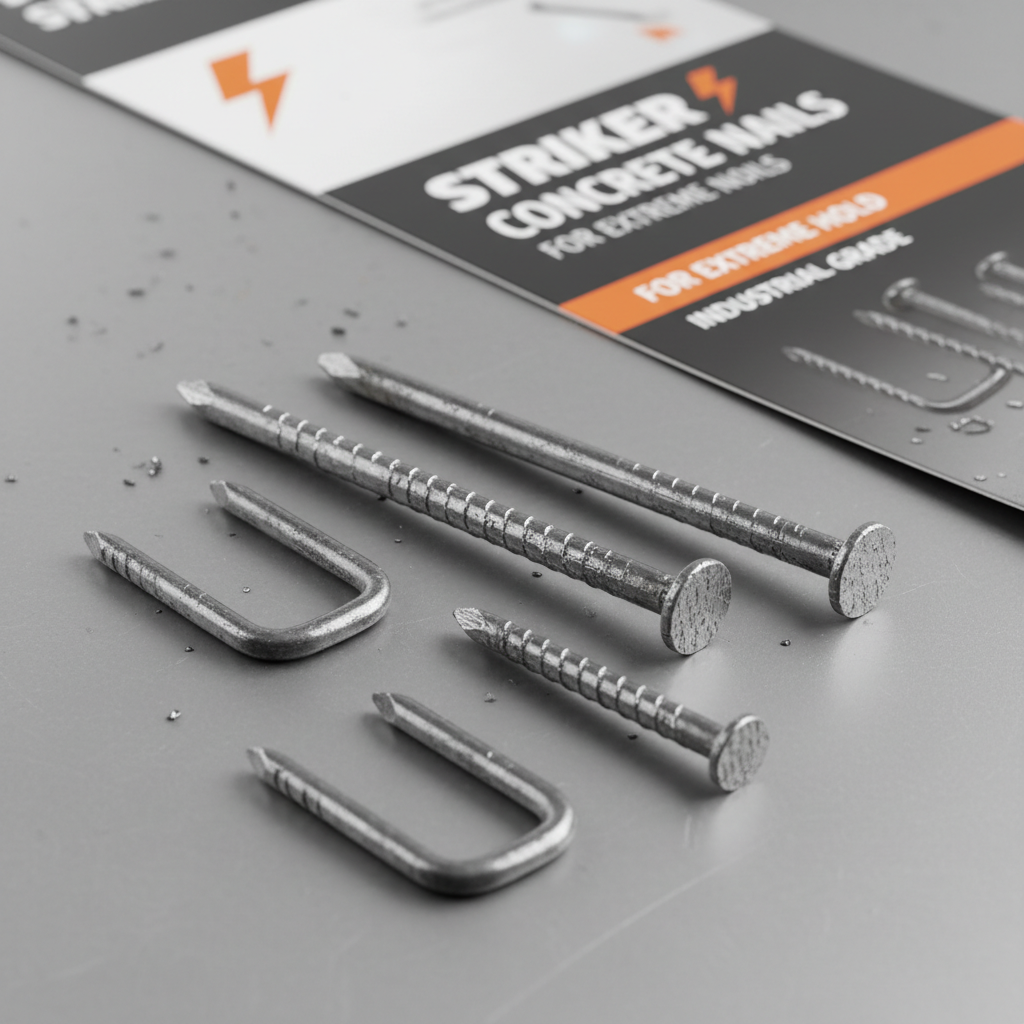
Striker concrete nails are hardened steel nails specifically designed for fastening into concrete, brick, and other masonry materials. Unlike standard nails, they possess a specialized design – often with a ribbed or ringed shank – that allows them to bite into the concrete as they are driven, providing a secure and lasting hold. They are typically driven using a power tool known as a concrete nailer, which delivers the necessary force and impact. The strength and durability of these nails make them ideal for applications where traditional fasteners would fail. SXJ Staple’s concrete nails are manufactured to withstand high stress and corrosion, ensuring long-term performance.
Key Highlights: Hardened steel construction provides superior strength and durability. Ribbed or ringed shank ensures a secure grip in concrete and masonry.
Applications of Striker Concrete Nails
Striker concrete nails are used in a vast range of construction and renovation projects. Common applications include: attaching furring strips to concrete walls, installing electrical boxes and conduit, securing wood framing to concrete foundations, and fastening insulation boards. They’re also frequently used in exterior applications, such as attaching siding or cladding to concrete structures. Their ability to create a strong, permanent bond makes them essential for projects requiring a high degree of structural integrity. From building renovations to new construction, SXJ Staple offers a diverse selection to meet various project requirements.
Common Applications:
• Attaching furring strips
• Installing electrical components
• Securing wood framing
• Fastening insulation
Striker Concrete Nails: Comparing Shank Types
Different types of striker concrete nails are available, primarily distinguished by their shank designs. The shank is the body of the nail and its design significantly impacts its holding power. Common shank types include ribbed, ringed, and smooth. Ribbed shanks provide excellent holding power in a variety of concrete densities, while ringed shanks offer superior resistance to pull-out, making them ideal for heavy-duty applications. Smooth shanks are less common for concrete but may be suitable for softer masonry materials. Understanding these differences allows you to choose the nail best suited for your specific project needs.
Choosing the Right Striker Concrete Nail: Key Considerations
Selecting the correct concrete nail involves considering several factors. The density of the concrete is paramount – harder concrete requires a more robust nail. Nail length is also crucial; it should penetrate sufficiently into the concrete to provide a secure hold, generally at least 1 inch. The gauge (diameter) of the nail impacts its strength; thicker gauges offer greater holding power. Finally, consider the environment – for outdoor applications, choose nails with a corrosion-resistant coating. SXJ Staple offers various coatings to suit different environmental conditions.
Product Specifications & Nail Size Chart
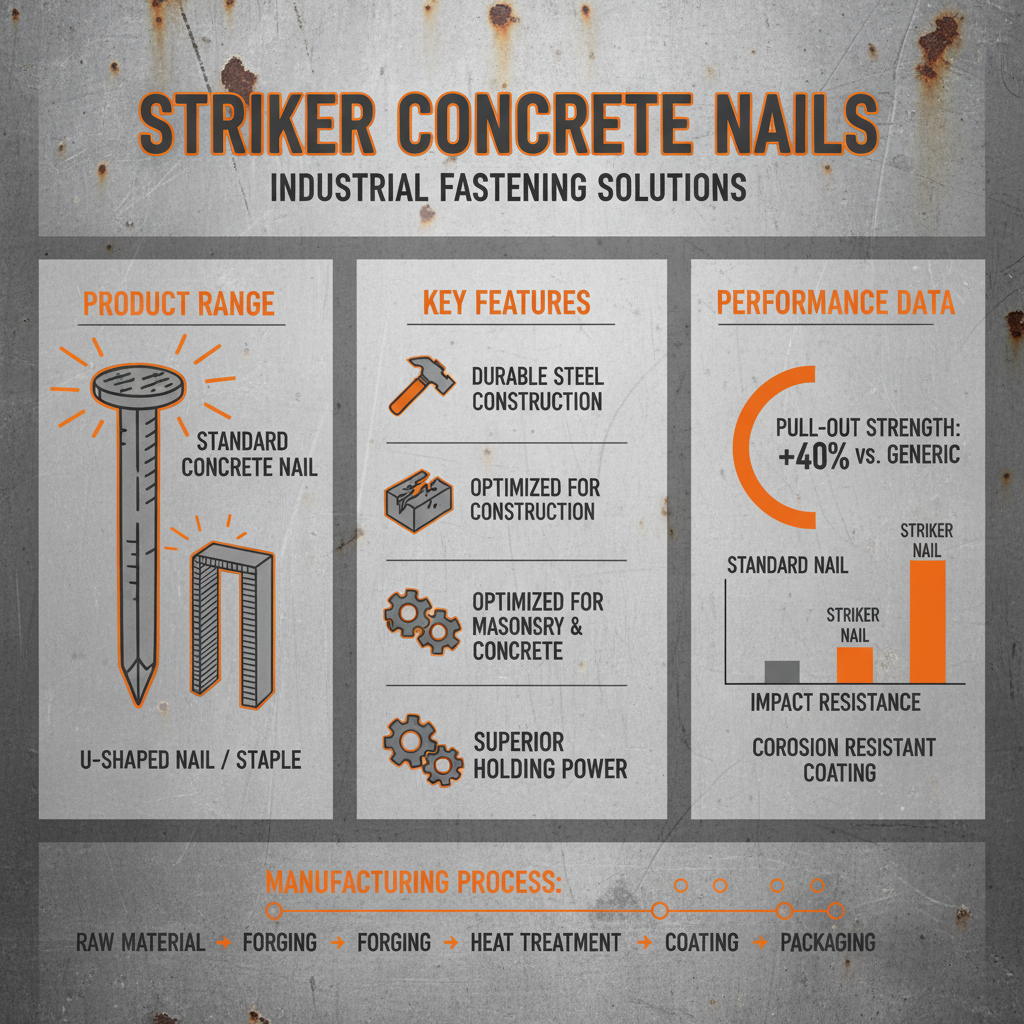
Here’s a typical specification range for striker concrete nails offered by SXJ Staple:
Conclusion: Choose SXJ Staple for Reliable Concrete Fastening
For dependable performance and a wide selection of striker concrete nails, SXJ Staple is your trusted partner. Our commitment to quality, durability, and customer satisfaction ensures you’ll have the right fasteners for any concrete application. Invest in the right nails – invest in a secure and lasting build.
Frequently Asked Questions (FAQs)
What type of nailer is required to drive striker concrete nails?
Striker concrete nails require a specialized nailer known as a concrete nailer or powder-actuated tool. These nailers utilize a small explosive charge to drive the nail directly into the concrete. It's essential to receive proper training and adhere to safety protocols before operating a concrete nailer. Using the correct nailer ensures proper nail penetration and a secure fastening.
What is the benefit of using a coated concrete nail?
Coated concrete nails offer enhanced corrosion resistance, making them ideal for outdoor applications or environments exposed to moisture. Common coatings include galvanized zinc and ceramic. These coatings protect the nail from rust and degradation, ensuring a long-lasting and secure hold. Without a protective coating, concrete nails can corrode over time, compromising their structural integrity.
How deep should a concrete nail penetrate the concrete?
Generally, a concrete nail should penetrate the concrete at least 1 inch (25mm) for a secure hold. However, the optimal penetration depth can vary depending on the concrete’s density and the load requirements. It's crucial to consult manufacturer guidelines and building codes to determine the appropriate penetration depth for your specific application.
Are striker concrete nails suitable for all types of concrete?
While striker concrete nails are designed for use in concrete, brick and masonry, their performance can vary depending on the concrete's density and composition. Soft or porous concrete may require larger diameter nails or a different fastening method. It's essential to assess the concrete's condition and choose the appropriate nail size and type to ensure a secure hold. If unsure, consult with a structural engineer or a fastening specialist.
-
The Ultimate Guide to Choosing 20mm Concrete Nails for ConstructionNewsApr.16,2026
-
Professional Guide to Using 2 inch concrete nails for ConstructionNewsApr.09,2026
-
Understanding the Strength and Versatility of 2 Concrete Nails for ProjectsNewsApr.07,2026
-
Understanding the Strength and Versatility of 2 1 2 Concrete Nails for ConstructionNewsApr.04,2026
-
Comprehensive Guide to Using 1 Inch Concrete Nails for Robust FasteningNewsMar.31,2026
-
The Ultimate Guide to 1 Concrete Nail Applications and Secure Fastening SolutionsNewsMar.28,2026