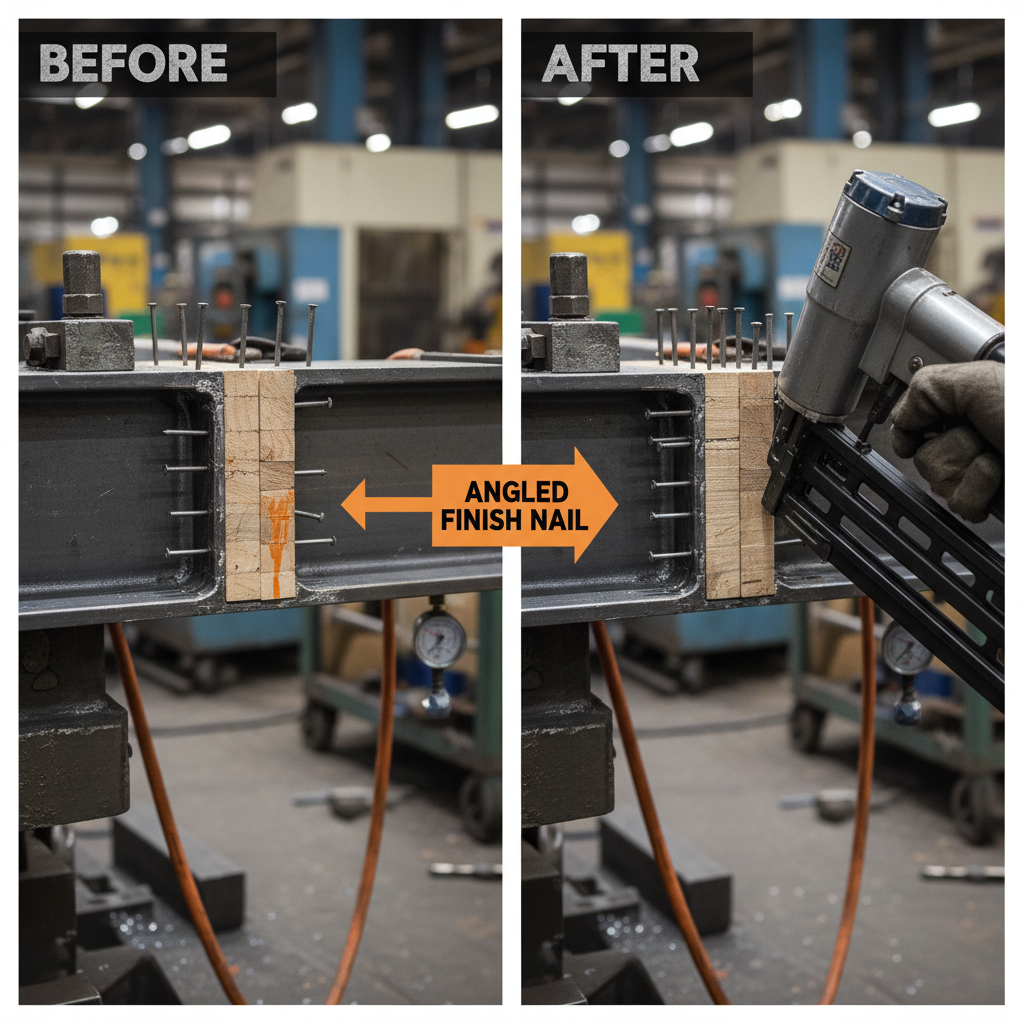
In the high-precision world of modern fastening, stainless steel collated finish nails represent the perfect intersection of material science and operational efficiency. These specialized fasteners are engineered to provide a discreet finish while offering unparalleled resistance to the elements, making them indispensable for high-end cabinetry, marine construction, and architectural detailing where aesthetic purity cannot be compromised by rust or structural failure.
The global shift toward sustainable and durable building materials has propelled the demand for collated systems that reduce waste and labor costs. By integrating the fasteners into a pre-assembled strip, contractors can significantly accelerate the assembly process without sacrificing the precision that a finish nail requires. This evolution in fastening technology ensures that structural integrity is maintained even in the most humid or corrosive environments.
Understanding the nuances of stainless steel collated finish nails—from the grade of the steel to the chemistry of the collation adhesive—is critical for professionals aiming to achieve a "zero-maintenance" result. Whether dealing with exotic hardwoods or composite materials, choosing the right collated fastener prevents the common pitfalls of bleeding stains and oxidation, ensuring a legacy of quality in every joint.
Global Industry Context of Stainless Steel Collated Finish Nails
The global construction and furniture manufacturing sectors are currently facing a dual challenge: the need for faster production cycles and a demand for lifelong durability. According to ISO standards for corrosion resistance, conventional carbon steel nails often fail prematurely in coastal regions, leading to costly replacements and structural degradation. This has catalyzed a global transition toward stainless steel collated finish nails, which offer a synergistic solution by combining the speed of pneumatic firing with the chemical stability of chromium-nickel alloys.
In markets like North America and Europe, where labor costs are high, the shift from manual nailing to collated systems has reduced installation time by up to 60%. The integration of stainless steel ensures that these efficiency gains are not offset by future maintenance issues, aligning with the global move toward "green building" certifications and sustainable urban development.
Defining the Technicality of Collated Finish Fasteners
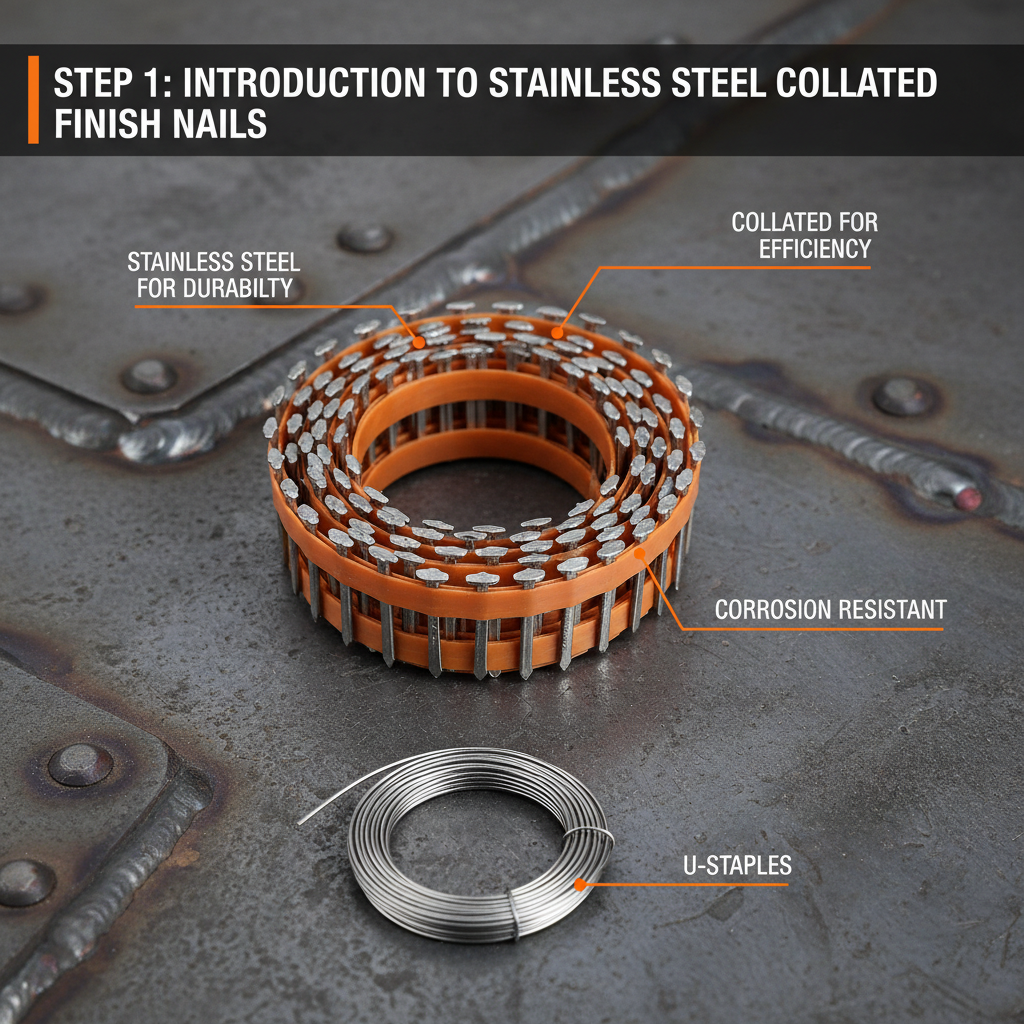
At its core, stainless steel collated finish nails are precision-engineered fasteners held together by a temporary bonding agent (typically a hot-melt glue or plastic strip) that allows them to be loaded into a pneumatic nail gun. Unlike standard nails, "finish" nails feature a very small head—often nearly flush with the shaft—which allows the fastener to be driven deep into the material, leaving a minimal entry hole that is easily filled or hidden.
The "stainless" aspect refers to the alloy composition, typically Grade 304 or 316, which creates a passive layer of chromium oxide on the surface. This microscopic shield prevents oxygen and moisture from penetrating the metal, thereby eliminating the "rust streaks" often seen in treated lumber or outdoor decking. For the modern industry, this means a reduction in chemical sealants and a reliance on the inherent properties of the metal.
From a humanitarian and industrial perspective, the adoption of these fasteners in modular housing and rapid-deployment shelters ensures that structures remain viable for decades regardless of the local climate. By utilizing stainless steel collated finish nails, builders can ensure that the fastest method of assembly is also the most durable, bridging the gap between speed and quality.
Core Components of High-Performance Finish Nails
The primary factor driving the success of stainless steel collated finish nails is the metallurgical purity of the wire used. The balance of Nickel and Chromium determines whether the nail can withstand salt-spray environments or if it is better suited for indoor humid areas like bathrooms and kitchens.
Another critical component is the collation technology. The adhesive must be strong enough to keep the nails perfectly aligned during high-speed transport and loading, yet brittle enough to shatter instantly upon firing. If the collation is too strong, it can cause "nail jam" or skewed driving; if too weak, the strip collapses, halting production.
Finally, the geometry of the point and the shaft diameter are optimized for minimal wood displacement. Because stainless steel collated finish nails are often used in delicate hardwoods, the point must be sharp enough to prevent splitting while the shaft maintains enough tensile strength to resist shearing forces over time.
Performance Metrics and Efficiency Gains
When analyzing the operational impact of switching to stainless steel collated finish nails, the most immediate metric is the "installation velocity." By eliminating the need to manually place each nail, craftsmen can focus on alignment and aesthetics, effectively doubling the output per man-hour.
Moreover, the long-term cost-benefit analysis reveals that while the initial purchase price of stainless steel is higher than galvanized steel, the "lifecycle cost" is significantly lower due to the total absence of corrosion-related failure. This is particularly evident in luxury yacht interiors and outdoor pavilions where failure is not an option.
Performance Comparison of Stainless Steel Collated Finish Nails
Global Applications and Real-World Use Cases
The application of stainless steel collated finish nails spans across diverse geographies and industries. In the luxury cabinetry markets of Italy and Germany, these nails are the gold standard for invisible fastening in high-moisture environments like high-end kitchens. The ability to drive the nail flush allows for a seamless finish that complements the artistry of the wood.
In more extreme conditions, such as the construction of coastal resorts in Southeast Asia or the Maldives, Grade 316 stainless steel collated nails are used to prevent "tea staining" and structural rot. In these regions, the high salt content in the air destroys conventional fasteners within months; however, stainless steel maintains its integrity, ensuring that the safety and dignity of the architecture are preserved for decades.
Long-Term Value and Sustainability Benefits
The shift toward stainless steel collated finish nails is not merely a technical choice but an environmental one. By extending the lifespan of the finished product, we reduce the frequency of demolition and rebuilding, which in turn lowers the amount of waste sent to landfills. The longevity of stainless steel means fewer resources are consumed over a 50-year cycle compared to cheaper alternatives.
Logically, the investment in premium fasteners reduces the "hidden costs" of project management. There is no need for costly callbacks to fix rusted joints or replace warped panels caused by fastener failure. This creates a circle of trust between the contractor and the client, as the work is guaranteed to withstand the test of time.
Furthermore, the precision of collated systems reduces material waste. Because the nails are fired with consistent force and placement, there are fewer "misfires" that ruin expensive hardwoods. This precision leads to a more sustainable use of natural timber, aligning with global forest conservation goals.
Future Trends in Automated Fastening Technology
Looking ahead, the industry is moving toward "smart collation," where the bonding agents for stainless steel collated finish nails are developed to be fully biodegradable. This removes the remaining plastic or chemical residue from the construction site, making the process entirely eco-friendly.
Automation and robotics are also playing a pivotal role. We are seeing the emergence of robotic arms equipped with collated nailers that can execute complex assembly patterns with sub-millimeter accuracy. This digital transformation reduces human error and allows for the mass customization of furniture and architectural components.
Additionally, new alloy blends are being explored to create "ultra-hard" stainless steel that provides the corrosion resistance of 316 but the drive-ability of carbon steel. This will further reduce the wear and tear on pneumatic tools, extending the life of the equipment used to drive stainless steel collated finish nails.
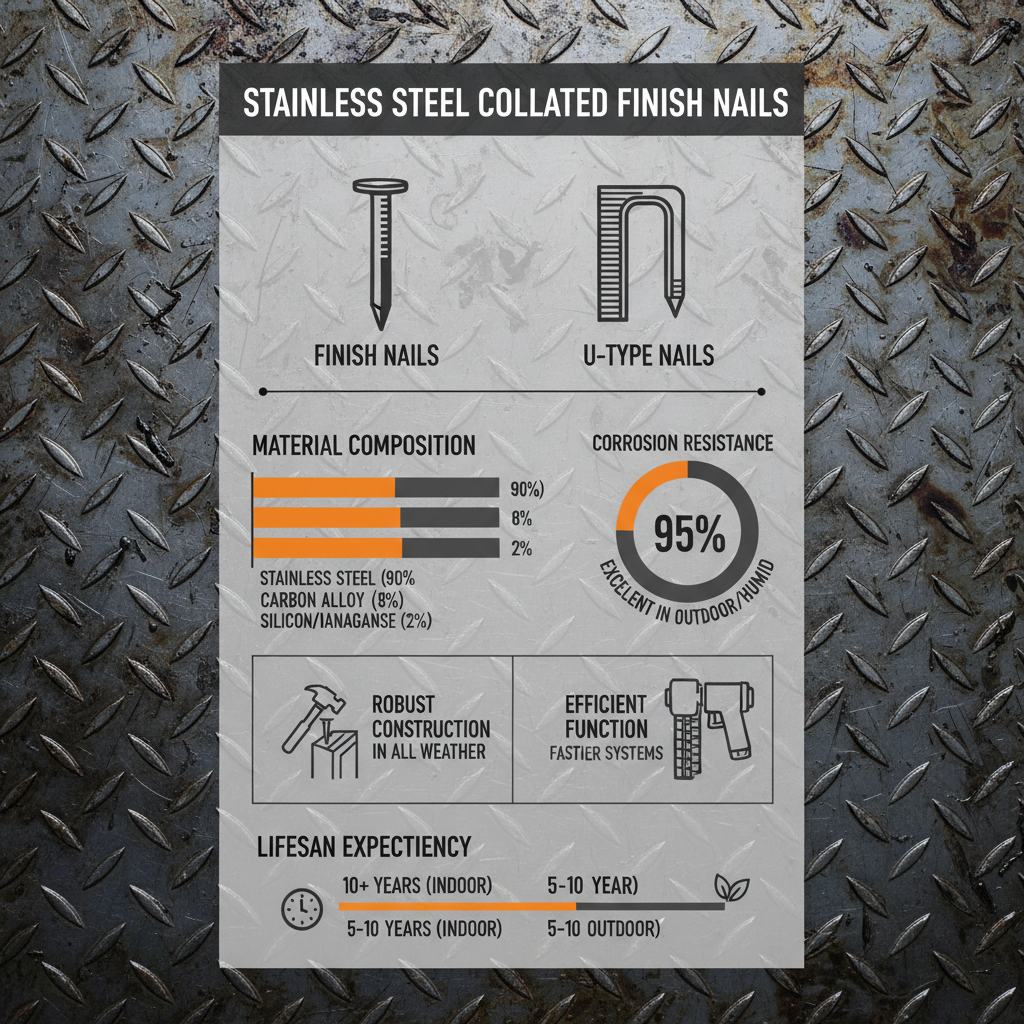
Technical Specification and Performance Analysis of Stainless Steel Collated Finish Nails
|
Material Grade
|
Corrosion Resistance
|
Primary Application
|
Lifespan Expectancy
|
| Stainless 304 Collated |
High (Indoor/Mild Outdoor) |
Kitchen Cabinets, Trim |
20-30 Years |
| Stainless 316 Collated |
Ultra-High (Marine/Coastal) |
Yachts, Beach Houses |
50+ Years |
| Galvanized Collated |
Moderate (General Outdoor) |
Fencing, Basic Decks |
5-10 Years |
| Bright Steel Collated |
Low (Indoor Dry Only) |
Interior Furniture |
2-5 Years |
| 400 Series Stainless |
Medium (Semi-Industrial) |
Industrial Fittings |
10-15 Years |
| Special Alloy Collated |
Customized (Extreme) |
Chemical Plants, Labs |
40+ Years |
FAQS
The primary difference lies in the addition of Molybdenum in Grade 316. While 304 is excellent for most interior and mild outdoor applications, 316 provides superior resistance to chlorides (salts), making it the only viable choice for marine environments or coastal regions to prevent pitting corrosion.
No, you must ensure the collation type (paper, plastic, or wire) matches your tool's magazine. Stainless steel collated finish nails are typically designed for specific gauge sizes (e.g., 16ga or 18ga). Always check the manufacturer's manual to avoid damaging the firing pin or causing jams.
The cost is driven by the raw materials; Chromium and Nickel are significantly more expensive than the zinc used in galvanization. However, the value is found in the lifespan. Stainless steel nails do not peel or flake, eliminating the need for future replacements and maintenance.
High-quality stainless steel collated finish nails are designed to be chemically inert. Unlike carbon steel, they do not react with the tannins found in woods like Cedar or Redwood, meaning you won't see the black "bleeding" streaks often associated with cheaper fasteners.
Jamming is usually caused by poor collation quality or incorrect air pressure. Use premium stainless steel collated finish nails with clean adhesive strips and maintain your nailer's lubricated system. Ensure the strip is seated fully in the magazine before firing.
Yes, primarily due to their durability. By preventing structural failure and rust, they reduce the need for repeated repairs and waste. Additionally, the move toward biodegradable collation adhesives is making the entire lifecycle of the product more sustainable.
Conclusion
In summary, stainless steel collated finish nails are an essential tool for the modern builder, providing a critical balance of speed, invisibility, and permanent corrosion resistance. By integrating high-grade alloys with efficient collation technology, these fasteners solve the age-old conflict between rapid assembly and long-term structural integrity.
As the industry moves toward more sustainable and automated construction practices, the reliance on premium materials will only grow. We recommend that professionals prioritize Grade 304 or 316 stainless steel for all high-value projects to ensure a legacy of quality and trust. For the highest quality fasteners and expert guidance, visit our website: www.sxj-staple.com